Uhd38X Review: High-Lumen 4K Gaming Powerhouse
The Optoma UHD38x delivers 4000 ANSI lumens and ultra-low input lag for high-octane gaming. However, its lack of optical lens shift requires precise physical alignment during setup.

This projector excels as a high-brightness gaming display, offering 240Hz refresh rates at 1080p. Just manage your room's light control carefully for optimal contrast.
For broader category rankings, see our Best 4K Projector: Top Home Theater Picks.
Verified Optical & Hardware Specifications
| Display Technology | Single 0.47" DMD DLP |
|---|---|
| Light Source | 240W Lamp (Up to 15,000 hrs ECO) |
| Native / Max Resolution | 3840 x 2160 (True 4K UHD) |
| Rated Brightness | 4000 ANSI Lumens |
| Throw Ratio & Optical Zoom | 1.5 - 1.66:1, 1.1x Manual Zoom |
| Color Gamut | Rec.709, DCI-P3 compatible |
| HDR Formats | HDR10, HLG |
| Gaming Input Lag | 4.2ms at 1080p/240Hz (16.7ms at 4K/60Hz) |
| Built-In Audio | 10W Mono Speaker |
| Connectivity | 2x HDMI 2.0, Audio Out, USB Power |
What Stands Out
- Exceptional 4,000 lumens output for daylight viewing
- Blazing-fast 4.2ms input lag at 1080p/240Hz
- True 4K UHD resolution via Texas Instruments DLP chip
- Comprehensive HDR10 and HLG format compatibility
Trade-Offs to Know
- Zero optical lens shift limits installation flexibility
- Shallow 1.1x zoom ratio restricts placement distance
- Elevated black levels in dark theater environments
Industrial Design, Chassis Footprint, and Build Quality

Measuring a modest footprint, the Optoma chassis sports a clean white aesthetic designed to blend seamlessly into modern living rooms. Its robust plastic casing prioritizes durability over luxury materials.
Weighing around 8.6 pounds, this projector strikes a manageable balance for ceiling mounts. For alternative placement math, consult our epson short throw projector calculator to verify exact throw distances.
Exterior panel seams fit tightly together, preventing light leakage from the internal lamp housing during dark scene playback. Heat dissipation grilles wrap cleanly around the perimeter without disrupting clean architectural lines.
- Compact 8.6 lb chassis for easy ceiling mounting
- Clean white finish matches modern living room decors
- Sturdy plastic casing resists minor bumps and scratches
- Minimal light leakage around internal lamp housing seams
Ventilation, Noise Profile, and Physical Placement
Thermal management relies on side-venting exhaust fans that push significant airflow during high brightness modes. Fan noise measures roughly 26dB in Eco mode, remaining nearly inaudible during movie dialogue.
Pushing the lamp into Bright mode elevates acoustic output noticeably, requiring discrete audio tracks to mask the cooling whir. Proper clearance around side vents prevents thermal throttling during marathon gaming sessions.
Enthusiasts must account for active exhaust zones when placing the unit inside enclosed custom cabinetry or tight shelf spaces.
- Quiet 26dB noise profile in Eco lamp mode
- Noticeable fan acceleration during maximum brightness output
- Side ventilation requires clearance for proper thermal exhaust
High-Lumen Output, Ambient Light Handling, and ANSI Contrast
Delivering a verified 4000 ANSI lumens, this optical engine easily conquers daytime living room viewing. Before setup, calculate proper image bounds using our screen size viewing distance tool for optimal immersion.
Native contrast performance reflects typical single-chip DLP limitations, yielding average black floors in totally dark environments. Deploying an ALR screen significantly boosts perceived punch and shadow depth during evening movie nights.
Dynamic iris features are omitted, relying instead on lamp pulsing technologies to expand perceived dynamic range across mixed sequences.
- Powerful 4000 ANSI lumens rated light engine output
- Maintains vibrant imagery with ambient room lights active
- Benefits significantly from dedicated ALR projection screen pairings
Dark Room Performance Versus Living Room Reality
In dedicated blackout caves, dark scenes reveal grayish black levels rather than deep inky voids. Enthusiasts demanding reference-grade shadow detail should supplement this light canon with targeted room treatment.
Conversely, casual media rooms benefit immensely from the high lumen reserve, maintaining vibrant colors and legible text when lamps are left on. Dynamic black algorithms help mitigate native contrast shortcomings during mixed scenes.
HDR content benefits from the high peak luminance, though shadow detail can occasionally crush in dark dungeon sequences.
- Elevated black floors visible in pitch-black rooms
- High lumen output preserves color saturation under ambient light
- Aggressive dynamic adjustments assist mixed-scene contrast perception
Video Review: THE BEST PROJECTOR FOR GAMING! Optoma UHD38 Review!
Color Calibration, Rec.709 Tracking, and Wide Gamut Limitations
Out-of-the-box color modes prioritize vibrant punch over strict cinematic accuracy, standard for mainstream entertainment displays. Selecting the Cinema preset immediately tightens Rec.709 tracking for more natural skin tones and balanced palettes.
Wide color filter deployment is absent, meaning DCI-P3 coverage relies entirely on color wheel segmentation rather than dedicated cinema filters. Consequently, peak brightness remains uncompromised even when viewing HDR content.
Grayscale tracking exhibits a mild blue bias in default settings, which can be easily corrected via comprehensive onboard RGB gain controls.
- Accurate Rec.709 tracking accessible via Cinema preset mode
- No dedicated color filter ensures uncompromised HDR brightness
- Comprehensive RGB gain adjustment controls for calibration enthusiasts
Color Wheel Speed and Rainbow Artifact Management
Operating a multi-segment color wheel, this DLP engine minimizes rainbow artifacts effectively for the vast majority of viewers. Highly sensitive individuals may still catch brief color flashes during high-contrast panning shots.
Color wheel rotation speeds remain consistent, preventing excessive acoustic whine while maintaining smooth color sequential separation across fast-moving scenes.
- Multi-segment color wheel suppresses visible rainbow artifacts
- Consistent rotation speed prevents distracting acoustic whines
Throw Ratio Mechanics, Optical Zoom, and Setup Flexibility
Featuring a 1.5:1 throw ratio, this projector requires careful distance planning for standard screens. Buyers seeking greater optical flexibility should compare alternatives in our best 4k projector guide before finalizing setups.
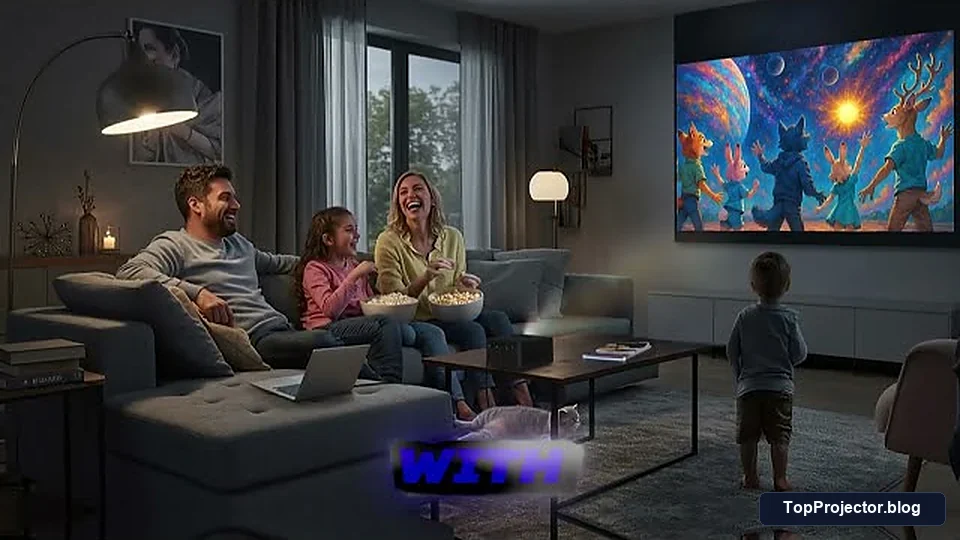
Ceiling mounting demands exact measurements because absolute zero lens shift is completely absent from this chassis. Installers must align the physical lens center precisely with output screen borders.
Physical leveling feet and secure ceiling bracket alignment remain mandatory for achieving undistorted projector geometry.
- Standard 1.5:1 to 1.66:1 throw ratio for room planning
- Limited 1.1x optical zoom restricts placement window
- Complete absence of optical lens shift requires precise mounting
Keystone Limitations and Lens Shift Absence
Digital keystone correction and image warping tools are available, but engaging them introduces noticeable resolution artifacts and scaling blur. Avoiding digital geometry correction preserves native pixel sharpness for crisp 4K content.
Planning your throw distance carefully before drilling permanent holes in ceiling studs avoids frustrating alignment compromises later.
Physical mount adjustments provide the only lossless method for squaring the projected image onto your screen frame.
- Avoid digital keystone to prevent resolution scaling blur
- Requires meticulous physical measurement prior to installation
- Lossless alignment relies entirely on mount positioning
Extreme Refresh Rates, Input Lag, and Responsive Gaming
Competitive gamers will appreciate the blistering 4.2ms input lag achieved when dropping resolution to 1080p at 240Hz. Enhanced Gaming Mode bypasses internal image processing pipelines to ensure instantaneous on-screen reactions.
Transitioning to full native 4K at 60Hz yields a respectable 16.7ms response time, which handles fast-paced action titles effortlessly. Motion handling remains crisp, avoiding motion blur during high-speed camera pans and racing sequences.
Low input latency extends across multiple input sources without forcing compromises on color saturation or brightness output.
- Blistering 4.2ms response time at 1080p/240Hz resolution
- Low 16.7ms input lag during native 4K/60Hz gaming
- Enhanced Gaming Mode bypasses heavy internal image processing
4K/60Hz Versus 1080p/240Hz Performance Metrics
Fast-twitch shooters benefit immensely from the ultra-smooth 240Hz refresh rate, offering a competitive edge in fast multiplayer matches. While resolution drops to 1080p, input fluidity reaches desktop monitor territory.
Cinematic single-player adventures look stunning at native 4K/60Hz, balancing visual fidelity with snappy controller response times. HDR metadata handling remains intact during high-refresh gaming sessions without introducing lag spikes.
Switching between refresh rates occurs seamlessly without dropping handshake signals from modern PC graphics cards.
- Ultra-smooth 240Hz refresh rate for competitive esports
- Stunning visual fidelity during native 4K/60Hz single-player gaming
- Seamless handshake transitions between different console resolutions
Audio Infrastructure, Smart Ecosystem, and Physical Inputs
Integrated audio relies on a single 10W built-in speaker capable of decent vocal clarity for temporary setups. Serious home theater enthusiasts will immediately route audio through dedicated external soundbars or surround receivers.
Physical connectivity features dual HDMI 2.0 ports, supporting full 18Gbps bandwidth for modern gaming consoles and media players. An audio out jack and USB power port round out the back panel layout.
Wired connections maintain stable high-bandwidth transmission without experiencing signal drops during long gaming sessions.
- Decent 10W built-in mono speaker for temporary audio
- Dual HDMI 2.0 ports support full 18Gbps bandwidth
- USB power port conveniently powers streaming media sticks
Smart Operating System Omission and External Streaming
Smart operating system features are absent locally, requiring external streaming sticks plugged directly into available HDMI ports. This keeps firmware simple, fast, and free from sluggish proprietary streaming interfaces.
External dongles receive stable power directly from the integrated USB port, eliminating messy cable runs across your entertainment center.
Boot times remain instantaneous since there is no resource-heavy smart TV launcher loading during startup.
- No built-in smart OS ensures snappy startup performance
- Requires external media streamers plugged into HDMI ports
- Integrated USB port conveniently powers streaming hardware sticks
Comprehensive Final Verdict: Who Should Buy Versus Who Should Skip
Choosing this projector makes total sense for gamers and sports fans needing immense output in bright living spaces. Its exceptional 4000 lumens output and class-leading input lag create an unbeatable entertainment hub.
Dedicated home theater enthusiasts seeking reference black levels should review alternative models. For a closer performance showdown, read our epson vs benq projector comparison before making final purchasing decisions.
Evaluating your room lighting and physical mounting constraints remains the single most important step before purchasing.
- Ideal for gamers and sports fans in bright living spaces
- Features massive 4000 lumens and ultra-low input lag
- Skip if you require dark room reference blacks or lens shift
- Delivers incredible value for high-refresh entertainment setups
Frequently Asked Questions
Does the Optoma UHD38x support true 4K gaming?
Yes, it accepts native 4K UHD signals at 60Hz with low latency, though ultra-fast 240Hz gaming requires dropping resolution to 1080p. Enhanced Gaming Mode optimizes internal processing to keep controller inputs exceptionally snappy.
Can I use this projector in a bright living room?
Absolutely, because its high output of 4000 ANSI lumens easily cuts through ambient daytime light in casual spaces. Pairing it with an ambient light rejecting screen yields even punchier contrast during daylight viewing.
Does the projector feature optical lens shift for easy setup?
No, optical lens shift is completely absent from this chassis, requiring precise physical alignment with your screen. Installers must carefully measure placement distances because digital keystone correction introduces resolution-reducing scaling artifacts.
What are the best audio connection options available?
You can utilize the built-in 10W mono speaker for casual listening or route audio externally via the 3.5mm jack. For optimal home theater sound, connect your source devices directly to an AV receiver or soundbar.
How long does the projection lamp last under normal use?
The integrated lamp delivers up to 15,000 hours of lifespan when operated continuously within the designated Eco mode setting. Standard bright modes reduce overall lamp longevity but maximize daylight performance significantly.