How Many Lumens For An Outdoor Projector: The Technical Standard
Selecting the correct light output prevents washed-out backyard movie nights. Master true ANSI lumens and ambient light dynamics.
Achieving a viewable outdoor image requires at least 3,000 ANSI lumens for total darkness, while daylight viewing demands 5,000+ lumens paired with high-gain ambient light rejecting screens.
Ready to compare verified models? Start with our Best Outdoor Projector: Top Backyard Movie Picks.
Practical Quick-Reference Table
| Scenario / Metric | Recommended Target | Why It Matters |
|---|---|---|
| Pitch Black Backyard | 3,000 - 3,500 ANSI Lumens | Minimizes eye strain while preserving deep black floor levels. |
| Dusk or Twilight | 4,000 - 4,500 ANSI Lumens | Combats residual ambient sunlight during early evening hours. |
| Daylight Sports | 5,000+ ANSI Lumens | Punches through direct ambient illumination to maintain color saturation. |
| Screen Size 100 Inch | 2,500 ANSI Lumens | Distributes photonic output effectively across smaller focal surfaces. |
| Screen Size 150 Inch | 4,000 ANSI Lumens | Compensates for the inverse square law of light dispersion. |
| Throw Distance Ratio | 1.2:1 to 1.5:1 | Ensures flexible backyard positioning without heavy digital keystoning. |
Demystifying ANSI Lumens Versus Marketing Brightness Metrics
Navigating outdoor projector specifications requires ignoring inflated marketing metrics. Manufacturers frequently invent ambiguous terms like LED lumens to disguise weak light engines. True ANSI lumens represent the standardized industry measurement of optical output.
Relying on standardized testing ensures you purchase equipment capable of fighting outdoor ambient light. For instance, the BenQ HT2060 review demonstrates how accurate ANSI measurements prevent muddy outdoor images.
Understanding this technical distinction protects your investment. Always verify that manufacturers explicitly state ANSI lumen ratings before evaluating any portable or backyard display hardware for your evening entertainment setups.
- Always demand verified ANSI lumen specifications over generic brightness terms.
- LED and lux ratings do not equate to standardized ANSI light output.
- Low-cost projectors underreport true optical degradation over extended operating hours.
- Standardized light measurement guarantees predictable performance in dark environments.
The Flaws of Non-Standardized Brightness Claims
Source manufacturers often measure light directly at the bulb diode. This ignores optical path loss, lens absorption, and internal thermal throttling. Real-world optical efficiency is drastically lower than factory diode claims.
Consumer awareness prevents disappointing purchases when setting up backyard theaters. Recognizing deceptive terminology ensures you select hardware designed for genuine outdoor projection challenges.
- Diode measurements ignore light loss through internal glass elements.
- Thermal management reduces light output during prolonged outdoor operation.
Evaluating Ambient Light and Outdoor Environment Dynamics
Outdoor environments feature uncontrolled light sources that degrade projected contrast. Streetlights and patio lamps wash out dark scenes instantly. Consult our Chromebook connection guide for proper source device setup.
Evaluating your exact setup location dictates your minimum light requirement. A pitch-black rural backyard requires far less optical power than a suburban patio surrounded by bright decorative exterior lighting fixtures.
Calculating ambient light interference involves assessing local lumens per square foot. High ambient light levels demand powerful laser or dual-lamp engines to preserve decent perceived contrast ratios on screen.
- Suburban backyards require higher lumen counts due to ambient street lighting.
- Total darkness environments allow lower lumen output without washing out.
- Reflective surfaces like light-colored walls bounce stray light onto screens.
- Moonlight intensity fluctuates and impacts dark scene visibility significantly.
Managing Stray Light and Urban Light Pollution
Urban light pollution introduces ambient photons that lift black levels. When black levels rise, your picture loses perceived depth and dynamic punch. Specialized ambient light rejecting screens help mitigate this issue.
Positioning your projection screen away from direct light sources improves fidelity. Simple structural placement blocks stray illumination before it hits the focal projection plane.
- Ambient light rejection screens absorb off-axis stray illumination.
- Strategic screen orientation shields optics from neighboring light fixtures.
Video Walkthrough: How Many Lumens for an Outdoor Projector?
ANSI Lumen Thresholds Across Specific Screen Sizes
Screen size directly dictates your required lumen output because light spreads outward. A larger canvas dilutes photon density across every square inch. Scaling up from 100 inches to 150 inches requires substantial power increases.
The inverse square law governs how light intensity diminishes over distance. Doubling your throw distance quarters the light hitting each unit of screen area, demanding higher initial luminous flux.
Matching your projector output to your screen dimensions prevents dim imagery. Smaller setups benefit greatly from our best mini projector for bedroom picks, while massive screens demand commercial optical engines.
- One hundred inch screens operate efficiently near 2,500 ANSI lumens.
- One hundred fifty inch screens require 4,000 ANSI lumens minimum.
- Light dispersion reduces perceived brightness exponentially over distance.
- Oversizing screens without adequate lumen support results in muddy visuals.
Calculating Screen Area and Light Distribution
Calculating square footage helps determine exact lighting demands for projection. Divide total luminous output by screen surface area to find foot-lamberts. Target at least 30 foot-lamberts for dark outdoor viewing.
Maintaining proper light distribution keeps corner illumination uniform across the frame. Uneven light falloff creates distracting hot spots or dark vignettes on large outdoor screens.
- Foot-lambert calculations ensure adequate punch for movie content.
- Uniform light distribution prevents center hotspotting on large screens.
Critical Optical and Contrast Factors Beyond Pure Output
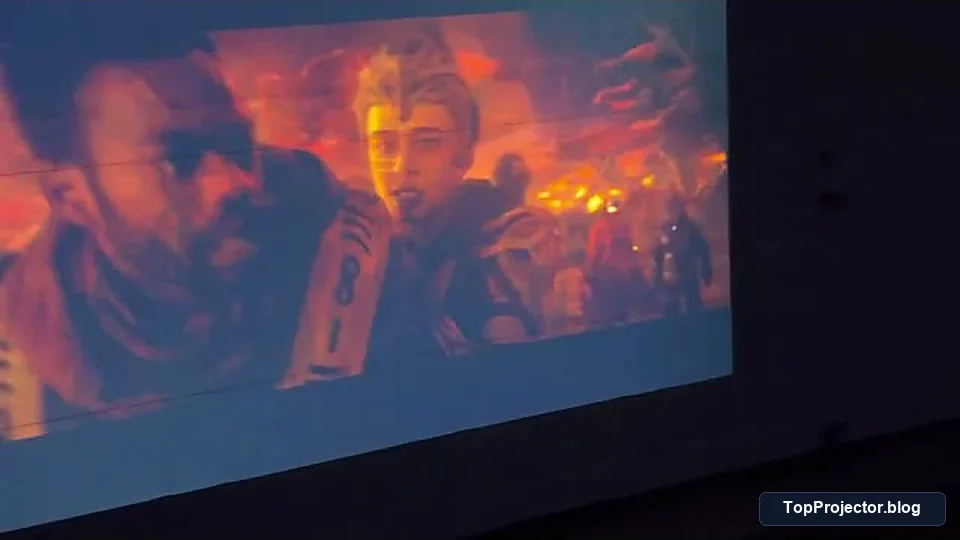
Lumens alone cannot guarantee a stunning outdoor cinematic experience. Dynamic contrast ratios dictate how well shadows separate from bright highlights. High native contrast performance delivers rich, immersive visual depth outdoors.
Color brightness matters just as much as white brightness measurements. Single-chip DLP projectors often feature lower color lumen output, causing colors to look washed out compared to 3LCD optical engines.
Lens quality also dictates image sharpness across the entire focal plane. Cheap plastic lenses introduce chromatic aberration, blurring fine details even when using high-lumen light sources.
- Native contrast ratios preserve shadow detail in dark movie sequences.
- Color brightness parity ensures vibrant, realistic skin tones outside.
- Glass lens elements minimize chromatic aberration and edge softening.
- High ANSI contrast prevents washed-out images under dim ambient conditions.
Video Walkthrough: Don't Buy Outdoor Lighting Without Watching This First
Understanding Throw Ratios and Placement Mechanics Outdoors
Throw distance determines where you physically position hardware in your yard. Short-throw projectors sit close to screens, avoiding foot traffic interference. Standard throw ratios range from 1.2:1 to 2.0:1 generally.
Backyard layouts often present physical constraints like patios, trees, and gardens. Selecting appropriate optics ensures you achieve desired image sizes without needing excessive throw distance clearances.
Digital keystone correction degrades native pixel resolution when aligning off-axis. Physical lens shift is vastly superior for maintaining crisp outdoor image geometry without processing artifacts.
- Short-throw models prevent viewers from walking through the light beam.
- Standard throw ratios require ample open space behind seating areas.
- Optical lens shift preserves full pixel resolution unlike digital keystone.
- Flexible placement accommodates uneven backyard terrain and landscaping.
Hardware Features That Protect Image Fidelity Outside
Outdoor environments subject sensitive electronics to dust, moisture, and temperature shifts. Sealed optical engines prevent airborne debris from landing on internal panels. Robust thermal management systems ensure prolonged outdoor reliability.
Solid-state laser or LED light sources eliminate fragile glass bulb replacements. They provide instant-on capabilities and consistent brightness throughout thousands of operating lifespan hours without severe degradation.
Built-in media players and smart operating systems streamline outdoor setups. Reducing cable clutter makes backyard movie nights much simpler and more reliable during regular seasonal use.
- Sealed optical blocks protect internal imagers from outdoor dust.
- Solid-state laser light sources offer thousands of maintenance-free hours.
- Instant-on functionality accelerates backyard setup and teardown routines.
- Robust cooling fans prevent thermal shutdown during warm summer evenings.
Calculating Your Personal Outdoor Projection Requirements
Determining your exact projector needs requires evaluating three core variables. Assess your local ambient light, desired screen diagonal, and viewing schedule. Balancing these factors identifies your ideal lumen target.
Nighttime enthusiasts focusing on complete darkness can safely choose 3,000 lumens. Families hosting early evening gatherings can consult our ANSI lumens room calculator to determine exact daylight requirements.
Documenting these environmental parameters prevents costly mismatched equipment purchases. Proper planning guarantees a vibrant, cinematic experience every time you project outdoors in your yard.
- Audit your yard for stray light sources before selecting hardware.
- Match screen size carefully to your chosen optical lumen output.
- Prioritize twilight capability if you plan to start movies early.
- Verify all manufacturer specifications utilize standardized ANSI metrics.
Frequently Asked Questions
Can I use an indoor home theater projector outdoors?
Indoor projectors function outdoors only if they exceed 3,000 ANSI lumens and operate in total darkness. Most dedicated home theater models lack the extreme brightness required to combat ambient outdoor light.
Are LED lumens the same as ANSI lumens?
LED lumens are an unverified marketing metric that significantly exaggerates brightness performance. Always rely strictly on standardized ANSI lumen specifications to evaluate true outdoor projection capability.
How many lumens do I need for daytime outdoor viewing?
Daytime outdoor projection requires a minimum of 5,000 ANSI lumens paired with specialized ambient light rejecting screens. Direct sunlight remains extremely difficult for standard projection technology to overcome.
Does screen gain affect how many lumens I need?
High-gain projection screens concentrate light toward viewers, effectively multiplying your projector brightness. Utilizing a positive gain screen helps lower your required ANSI lumen threshold significantly.
Why does my outdoor projected image look washed out?
Washed-out images typically stem from insufficient ANSI lumens fighting ambient light pollution. Upgrading optical output or improving your backyard ambient light control restores contrast.