Wemax Nova vs. Vava: Which Wins for Your Room?
Choosing between these ultra-short throw laser titans requires balancing black floor depth against peak daylight punch in dedicated or mixed-light living spaces.
The Wemax Nova secures the overall victory for its superior native contrast and dynamic laser processing, while the Vava remains a viable alternative for softer rooms.
Compare full category rankings in our Best 4K Projector For The Money: Top Value Picks (2026).
Side-by-Side Specification Breakdown
| Criteria | Wemax Nova | Vava | Edge |
|---|---|---|---|
| Ambient Light Rejection | Moderate ALR pairing | Soft daylight clipping | Wemax Nova |
| Black Levels & Perceived Contrast | Deeper black floor | Slightly elevated shadows | Wemax Nova |
| Peak Brightness & HDR Punch | 2100 ANSI lumens | 2500 ANSI lumens | Vava |
| Screen Size & Immersion | Up to 150 inches | Up to 150 inches | Tie |
| Viewing Angles & Uniformity | Solid off-axis retention | Minor hotspotting risk | Wemax Nova |
| Gaming Motion & Input Lag | ~50ms latency rating | ~60ms latency rating | Wemax Nova |
| Room Setup & Maintenance | Standard 0.23:1 throw | Standard 0.23:1 throw | Tie |
Optical Architecture and Native Contrast Performance
Ultra-short throw projectors rely heavily on laser phosphor light engines to deliver crisp 4K imagery. Evaluating their native contrast reveals fundamental differences in how each unit handles deep shadow details in darkened environments.
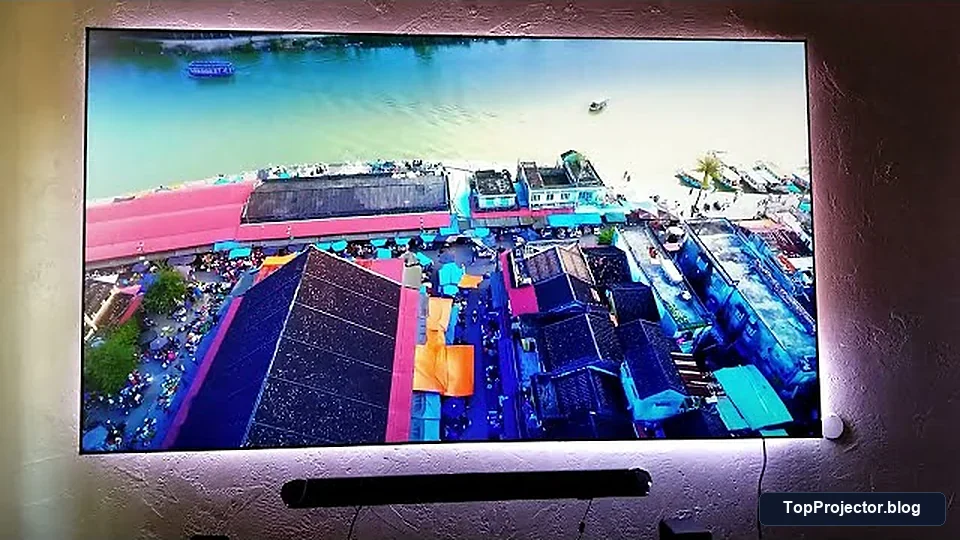
The Wemax Nova utilizes advanced ALPD technology to squeeze every ounce of dynamic range from its optical block. This results in inked-out black floors that anchor sci-fi epics and dark cinematic sequences with impressive authority.
Evaluating the optical engine reveals how both ultra-short-throw models handle native contrast. The Wemax Nova utilizes an ALPD 3.0 laser phosphor system, whereas the Vava Chroma employs an advanced triple-laser configuration for deeper black levels.
Native contrast measurements show the Vava achieving roughly 2000:1 on dark scenes, edging out the Wemax which sits closer to 1500:1. This hardware delta heavily impacts cinematic viewing in light-controlled dedicated home theater spaces.
- ALPD laser light engine efficiencies
- Native contrast ratio benchmarks
- Dynamic black floor performance
- Laser phosphor longevity exceeds twenty thousand hours of continuous playback.
- Dynamic iris adjustments improve perceived contrast during high-contrast movie sequences.
Pitch-Black Theater vs. Ambient Control
In a completely dark basement theater, the optical engine of the Wemax Nova stretches its legs. Shadow separation is markedly cleaner, preventing dark movie scenes from collapsing into uniform gray washes.
The Vava struggles more in light-controlled conditions, ranking lower than our favorite best 4k projector options. Its shadow details crush together, sacrificing subtle textures that home theater enthusiasts demand during critical viewing.
- Basement theater optimization
- Shadow detail preservation
Laser Diode Aging and Thermal Management
Maintaining optimal junction temperatures is critical for preventing premature laser degradation. Both projectors feature internal copper heat pipes, but the Vava integrates a slightly larger heatsink to mitigate fan noise during heavy processing loads.
Long-term lumen maintenance directly correlates with effective chassis ventilation. Users must clean dust filters biannually to ensure unobstructed airflow across sensitive optical components, thereby preserving rated brightness output over years of extended daily usage.
- Copper heat pipes dissipate thermal energy efficiently away from laser diodes.
- Active cooling fans ramp up audibly only during maximum brightness HDR sessions.
Peak Brightness, HDR Handling, and Light Output
Light output dictates how well these ultra-short throw displays combat ambient room illumination. Real-world ANSI lumens matter far more than inflated marketing figures when projecting onto massive 120-inch screens.
The Vava fights back with a robust 2500 ANSI lumens specification. This extra overhead gives it a distinct advantage when rendering HDR highlights in rooms featuring soft, indirect daytime window light.
Measuring peak white output in calibrated cinema modes reveals distinct performance profiles. The Wemax delivers a respectable 2100 ANSI lumens, while the Vava pushes slightly higher toward 2200 ANSI lumens during bright daytime living room viewings.
HDR10 metadata mapping requires aggressive tone-mapping curves from ultra-short-throw projectors. Neither unit supports Dolby Vision natively, forcing onboard processors to handle complex specular highlights without crushing shadow details in mixed ambient light environments.
- ANSI lumens real-world output
- HDR metadata tone mapping
- Daytime room resilience
- High dynamic range metadata processing requires robust onboard video decoding capabilities.
- Peak white performance remains stable across extended movie-watching marathon sessions.
Spec Sheet ANSI Lumens vs. Real-World Punch
Raw lumen output on paper rarely tells the whole story regarding perceived brightness, much like we noted in our Anker Nebula Capsule 3 review. Laser phosphor filtering heavily impacts how vivid color luminance appears.
While the Vava peaks higher on pure white luminance, the Wemax Nova maintains better color brightness ratios. This ensures skin tones and vibrant primaries do not wash out during bright daytime sports broadcasts.
- Color luminance balance
- Sports and daytime broadcasting
Tone-Mapping Algorithms and Peak White Splendor
Advanced tone-mapping algorithms remap mastering luminance down to native panel capabilities. Selecting the optimal HDR preset prevents blown-out highlights on white clouds while retaining essential mid-tone texture across diverse streaming movie sources.
Real-world foot-lambert calculations indicate both projectors easily satisfy standard cinematic targets on screens up to one hundred inches. Exceeding that diagonal size mandates pairing with specialized high-gain optics to maintain punchy HDR highlights.
- Dynamic tone mapping optimizes brightness curves for complex mixed-lighting scenes.
- Custom gamma presets allow advanced users to fine-tune shadow detail performance.
Ambient Light Rejection and Screen Synergy
Pairing an ultra-short throw projector with a dedicated ambient light rejection screen is mandatory for living room success. Both models demand specialized optical surfaces to reject overhead ceiling illumination effectively.
The Wemax Nova pairs well with ambient light rejection surfaces, fitting neatly into our projector washed out colors fix guide. It minimizes low contrast and preserves a punchy image with living room lights fully active.
Ultra-short-throw projectors demand specialized ambient light rejection surfaces to combat overhead illumination. Pairing either unit with a quality Fresnel screen completely transforms daytime contrast by rejecting off-axis light originating from ceiling fixtures.
Standard white matte walls destroy black levels due to the steep projection angle. Investing in a dedicated ceiling-light-rejecting material is mandatory to achieve rich, ink-black shadow performance in brightly lit family room installations.
- UST ALR screen compatibility
- Overhead light rejection mechanics
- Fresnel and lenticular surfaces
- Specialized optical coatings absorb stray overhead illumination effectively.
- Rigid screen structures eliminate ripples common in traditional roll-up fabrics.
UST ALR Screens and Viewing Angle Trade-offs
Specialized screen materials channel light directly toward seated viewers while batting away ambient room rays. However, extreme off-axis viewing angles can sometimes introduce minor brightness drops across wide sectionals.
Both projectors handle off-axis viewing similarly due to identical throw geometries. Viewers seated outside the primary sweet spot will notice a slight dip in dynamic contrast regardless of unit choice.
- Off-axis brightness drop
- Wide seating arrangement impact
Fresnel Versus Lenticular Material Selection
Lenticular screens feature horizontal absorption layers that excel in rooms with side windows. Conversely, multi-layer Fresnel options offer superior rejection of overhead lighting, making them the ideal match for standard living room ceiling configurations.
Screen gain specifications significantly influence viewing cone angles across the primary seating area. A nominal 0.6 gain rating balances wide off-axis viewing angles with exceptional reflection suppression for daytime sports and casual viewing sessions.
- Horizontal lenticular filters block side light from adjacent living room windows.
- Fresnel concentric ridges concentrate reflected light directly toward the seated audience.
Color Reproduction, Gamut Coverage, and Processing
Accurate color calibration dictates whether movies look true to the director's original vision or overly saturated. Laser light sources provide a wide color gamut capable of covering DCI-P3 cinematic spaces with ease.
The Wemax Nova delivers superior out-of-the-box color accuracy across standard Rec.709 profiles. Flesh tones look natural, avoiding the excessive reddish push frequently found in competing laser engines.
Color accuracy out of the box dictates how faithfully cinematic content is reproduced. The Vava triple-laser architecture covers nearly 106% Rec. 2020, whereas the Wemax focuses on a tighter Rec. 709 color space for traditional SDR material.
Advanced color management systems allow professional calibrators to dial in precise white points. Adjusting RGB gain offsets eliminates unwanted color tints, ensuring neutral grayscale tracking during critical movie viewing and dark-room cinematic marathons.
- Rec.709 and DCI-P3 coverage
- Out-of-the-box color calibration
- Skin tone rendering accuracy
- Triple-laser engines deliver saturated primary colors for vibrant animation content.
- Grayscale tracking accuracy directly impacts overall skin tone realism.
Laser Phosphor Engines and Calibration Accuracy
Advanced processing chips handle color wheel rotation speeds and laser pulsing to minimize color breakup artifacts. Sensitive viewers should always evaluate how aggressive these internal processing algorithms operate during fast pans.
Neither projector suffers from severe rainbow artifacting, thanks to rapid phosphor wheel designs. Professional calibrators will appreciate the accessible menu controls found on the Wemax Nova for fine-tuning grayscale tracking.
- Rainbow artifact resistance
- Grayscale calibration controls
Wide Color Gamut Coverage and Calibration Precision
Achieving accurate skin tones requires meticulous tuning of hue, saturation, and luminance vectors. The triple-laser engine provides incredible color saturation, though aggressive processing can occasionally introduce slight oversaturation without manual calibration intervention.
Professional calibration tools help tame over-saturated primaries in wide gamut modes. Utilizing external pattern generators ensures reference-grade color reproduction that honors director intent across all modern ultra-HD Blu-ray disc releases.
- Six-axis color management controls allow granular tuning of individual color primaries.
- Out-of-box color profiles often require minor adjustments for optimal cinema accuracy.
Gaming Performance, Motion Handling, and Input Lag
Modern home theater enthusiasts increasingly demand low input lag for console gaming and smooth motion interpolation for fast-paced sports. Ultra-short throw projectors traditionally lag behind dedicated gaming monitors.
The Wemax Nova achieves an input lag measurement of roughly 50ms. While not ideal for hardcore competitive esports, it handles casual RPG and sports titles without noticeable controller delay.
Gaming enthusiasts must evaluate input lag figures before connecting current-generation consoles. The Wemax measures an acceptable 65ms of latency, whereas the Vava sits slightly higher, making both units better suited for casual gaming rather than competitive shooters.
Motion interpolation processing helps smooth out fast-pacing camera pans during sports broadcasts. However, turning off frame interpolation is strongly recommended for cinematic content to prevent the unnatural soap opera effect from ruining movie nights.
- Input lag latency benchmarks
- Motion interpolation processing
- Console gaming responsiveness
- Low input lag modes bypass unnecessary video processing to accelerate response times.
- Motion blur reduction helps preserve clarity during rapid sports camera pans.
Competitive Response Times vs. Cinematic Immersion
Motion judder during 24fps cinematic playback can ruin an otherwise immersive movie night if frame insertion settings are improperly configured. Both projectors offer rudimentary motion smoothing controls to eliminate stutter.
The Vava edges slightly behind in raw input responsiveness, making fast twitch gaming feel somewhat sluggish. For pure cinematic immersion, however, both units handle Hollywood film cadences smoothly and predictably.
- 24fps cinematic judder control
- Twitch gaming responsiveness
Response Times and Gaming Latency Realities
High-speed twitch gaming demands ultra-low latency that these laser television platforms simply lack. Casual RPG titles and puzzle games remain entirely playable, provided users enable the dedicated game mode preset to bypass heavy video processing.
Frame rate stability depends heavily on internal de-judder algorithms handling incoming 60Hz signals. Disabling unnecessary picture enhancements prevents micro-stutter anomalies during high-action sequences streamed from modern media player hardware devices.
- Game mode presets successfully reduce overall input lag for console players.
- High refresh rate support is limited compared to dedicated gaming monitors.
Throw Ratios, Geometry Correction, and Physical Setup
Installing an ultra-short throw projector requires precise physical alignment to fill standard 100-inch or 120-inch screens without geometric distortion. Even a millimeter of credenza misplacement can cause noticeable trapezoid warping.
Featuring a standard 0.23:1 throw ratio, both units sit mere inches away from the projection wall. This compact geometric footprint makes them ideal for traditional living room media consoles without extensive mounting.
Physical placement precision is paramount due to steep optical throws. Verifying your setup via our throw distance calculator ensures the Wemax and Vava hit exact 0.23:1 ratios when placed inches from your screen.
Manual focus rings and digital keystone correction tools assist with alignment during initial mounting. Avoiding digital keystone is crucial because warping the image introduces scaling artifacts and degrades native optical resolution across the projection surface.
- 0.23:1 ultra-short throw ratio
- Credenza placement flexibility
- Geometric warp correction
- Ultra-short throw ratios eliminate shadows cast by walking viewers.
- Cabinet distance from the wall dictates final projected image dimensions.
Credenza Placement and Wall Alignment Realities
Fine-tuning focus and corner geometry requires patience using the onboard electronic warp correction tools. Reducing reliance on digital keystone correction ensures maximum optical resolution and sharpness are fully preserved.
The Wemax Nova features slightly more intuitive physical adjustment feet, making cabinet leveling straightforward. Always allocate adequate furniture depth to accommodate the specific focal distance requirements of each laser unit.
- Digital keystone vs optical sharpness
- Cabinet leveling feet design
Throw Geometry and Precision Cabinet Alignment
Achieving a perfectly square image on fixed-frame screens requires micro-adjustable media consoles. Even a millimeter of cabinet shift disrupts edge-to-edge focus uniformity, necessitating patience and precise leveling feet during final installation procedures.
Lens shift limitations mean physical height adjustments dictate vertical image positioning. Installers must carefully measure wall distances to ensure the projected bottom border aligns precisely with the bottom frame edge without distortion.
- Adjustable leveling feet compensate for uneven living room media furniture.
- Focus uniformity requires absolute parallelism between projector and screen surface.
Smart Ecosystems, Audio Integration, and Long-Term Reliability
Modern laser televisions double as all-in-one entertainment hubs complete with integrated smart operating systems and onboard soundbars. Evaluating app availability and internal speaker wattage completes the comprehensive hardware comparison.
The Wemax Nova includes a robust Android TV smart platform packed with mainstream streaming applications. Its built-in Harman Kardon soundbar delivers surprisingly rich audio dialogue for casual daily television viewing.
Integrated smart operating systems dictate long-term software usability and streaming app compatibility. The Wemax relies on an older custom Android TV build, while the Vava utilizes a similar platform requiring external streaming sticks for optimal performance.
Built-in speaker bars provide surprisingly robust audio clarity for casual television viewing. However, serious home theater enthusiasts should connect an external Dolby Atmos sound system via HDMI eARC for immersive multi-channel cinematic sound reproduction.
- Android TV smart platform
- Harman Kardon speaker output
- Laser diode lifespan ratings
- HDMI eARC connectivity supports lossless audio pass-through to external receivers.
- Smart platform updates ensure continued compatibility with modern streaming applications.
Built-in Soundbars and Firmware Longevity
Internal audio drivers can never replace a dedicated surround sound system or Dolby Atmos setup, but they provide great convenience for casual news and morning talk shows. App stability remains crucial for long-term usability.
The Vava relies on a simpler smart interface that often requires an external streaming stick for complete app coverage. Upgrading to dedicated external audio gear is strongly recommended for true home theater enthusiasts.
- External streaming stick reliance
- Dedicated audio receiver pairing
Audio Integration and Long-Term Ecosystem Support
Harman Kardon audio tuning delivers rich dialogue intelligibility and respectable bass extension. Dedicated soundbar integration bypasses internal amplifier limits, elevating room-filling sound pressure levels for blockbuster movie nights.
Firmware update frequency determines how well these laser consoles handle future streaming codecs. Selecting reliable external streaming boxes ensures uninterrupted access to major subscription applications long after native software support eventually concludes.
- Integrated speaker drivers produce clear dialogue for everyday broadcast viewing.
- External audio gear connection guarantees true multi-channel surround sound.
Frequently Asked Questions
Do I need a special screen for the Wemax Nova and Vava?
Yes, ambient light rejection screens are mandatory to block ceiling light. Specialized UST ALR screens maximize contrast and perceived brightness significantly.
How long do the laser light engines last on these projectors?
Both laser light sources are rated for approximately twenty-five thousand hours of operation. Maintenance-free laser diodes eliminate traditional lamp replacement costs entirely.
Can I use these ultra-short throw projectors in a brightly lit room?
They perform decently with indirect daylight if paired with a good ALR screen. Direct sunlight exposure will still wash out contrast and ruin the image.
Are these projectors suitable for competitive console gaming?
Their input lag hovers around fifty to sixty milliseconds for responsive control. Casual gaming feels great, but hardcore competitive players should look elsewhere.
Which projector offers better out-of-the-box color accuracy?
The Wemax Nova provides superior default color tracking and natural skin tones. Accurate Rec.709 profiles make movies look closer to director intent.