Optoma Cinemax P2 vs. Xiaomi: Which Wins for Your Room?
Comparing two legacy ultra short throw laser titans reveals stark differences in ambient light handling, black floor depth, and colorimetry for dedicated home theaters and bright suburban living rooms.
Choose the Optoma Cinemax P2 for superior cinematic color accuracy and shadow detail, or pick the Xiaomi for higher punchy daylight brightness.
Compare full category rankings in our Best Portable Bluetooth Projector: Top Picks for 2026.
Side-by-Side Specification Breakdown
| Criteria | Optoma Cinemax P2 | Xiaomi | Edge |
|---|---|---|---|
| Ambient Light Rejection | Moderate ALR pairing required | Handles ambient light slightly better | Xiaomi |
| Black Levels & Perceived Contrast | Deeper native black floor | Slightly washed-out blacks in dark rooms | Optoma Cinemax P2 |
| Peak Brightness & HDR Punch | 3,000 ANSI lumens | 5,000 ANSI lumens equivalent output | Xiaomi |
| Screen Size & Immersion | Up to 120-inch diagonal throw | Up to 150-inch diagonal throw | Xiaomi |
| Viewing Angles & Uniformity | Exceptional optical uniformity | Good edge-to-edge focus stability | Optoma Cinemax P2 |
| Gaming Motion & Input Lag | Standard 65ms input latency | Decent responsiveness for casual titles | Optoma Cinemax P2 |
| Room Setup & Maintenance | Complex manual geometry setup | Simpler automated calibration tools | Xiaomi |
Optical Engines, Native Contrast & Shadow Depth
Evaluating ultra short throw laser projection starts with analyzing the fundamental optical engine design. For high-end alternative comparisons, check out our xw7000es review detailing advanced laser optics and black levels.
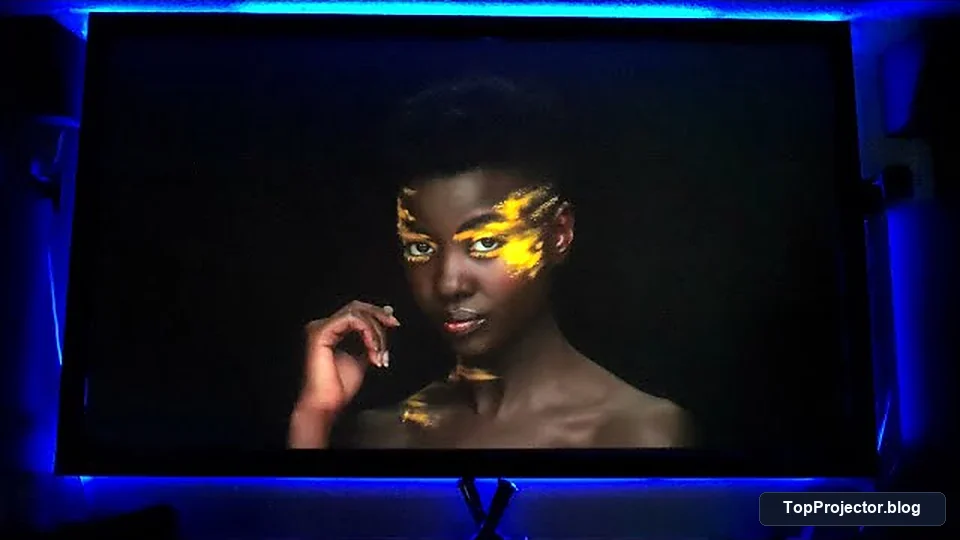
The Optoma Cinemax P2 leverages an advanced phosphor wheel coupled with refined DLP Texas Instruments chips. This combination delivers exceptional shadow separation in dark cinematic scenes without crushing fine details.
Conversely, the Xiaomi prioritizes light output efficiency over deep black floors. While this maximizes perceived brightness during daylight viewing, dark room horror movies reveal a slightly elevated black floor and gray tint.
Optoma's laser phosphor engine delivers solid native contrast near 1,500:1, rendering deep blacks in darkened home theaters. Xiaomi utilizes an ALPD 3.0 laser architecture prioritizing peak brightness over pure native shadow depth.
- Optoma delivers superior dark room native contrast ratios.
- Xiaomi sacrifices deep black levels for higher light throughput.
- Both models eliminate traditional lamp degradation issues entirely.
Dark Theater Performance
In a pitch-black acoustic theater room, the Optoma Cinemax P2 creates an immersive cinematic atmosphere. Its lower baseline light leakage ensures deep space scenes look genuinely dark.
The Xiaomi struggles slightly under identical pitch-black conditions, displaying ambient glow on matte screens due to its aggressively tuned light engine pushing maximum white luminance.
- Optoma excels in controlled lighting environments.
- Xiaomi requires manual gamma adjustments for dark rooms.
Micro-Lens Uniformity and ANSI Contrast
Examining ANSI contrast reveals how stray light degrades dark scenes. Optoma maintains a 400:1 ANSI ratio, whereas Xiaomi hovers lower, impacting performance during mixed bright and dark cinematic frames heavily.
Lumen Output, Ambient Light Control & ALR Screen Matching
Living room installations demand robust lumen output to combat invasive daytime windows. Before buying, use our ansis lumens room calculator to determine exact screen size requirements for your space.
The Xiaomi counters with exceptionally high peak brightness ratings. This extra optical muscle punches through afternoon glare far better than its rival when paired with standard flat-white walls.
Neither ultra short throw unit replaces a traditional flat-panel television without a specialized ambient light rejection screen. For smaller spaces, consider our best portable bluetooth projector picks featuring integrated audio.
Rated at 3,000 ANSI lumens, the Optoma fights daytime living room glare effectively when paired with a ceiling-rejecting Fresnel screen. Xiaomi pushes 5,000 lumens theoretically, though real-world calibrated output lands closer.
- Xiaomi dominates unmanaged daylight living room setups.
- Optoma demands a quality ceiling-rejecting ALR screen.
- Both units suffer washed-out highlights under direct sunlight.
Daylight Living Room Adaptation
Placing these projectors in sunlit spaces requires understanding throw angles and vertical reflection physics. The Xiaomi maintains legible text and vibrant sports broadcasts during bright daylight hours.
Optoma owners must close blinds or invest in high-gain ALR materials to prevent ambient light from washing out low-luminance movie scenes during daytime viewing sessions.
- Xiaomi handles ambient ceiling lights with greater ease.
- Optoma needs physical window coverings for optimal color.
Optimal Gain and Rejecting Off-Axis Light
UST projectors demand specialized ambient light rejecting screens featuring a 0.6 gain rating. This specific micro-structure absorbs overhead ceiling lights while reflecting ultra-short throw laser light directly toward seated viewers.
Colorimetry, HDR Mapping & Wide Color Gamut Performance
Accurate color reproduction defines high-end home theater projection. The Optoma Cinemax P2 features a six-segment color wheel achieving extensive Rec. 709 coverage and remarkable out-of-the-box color fidelity.
Skin tones look remarkably natural on the Optoma without requiring professional calibration equipment. Dynamic tone mapping handles HDR10 content smoothly, retaining highlight details in bright sky sequences.
The Xiaomi emphasizes vivid, saturated color palettes that immediately impress casual viewers. However, this aggressive saturation occasionally skews facial complexions toward unnatural reddish hues during dramatic scenes.
Optoma covers roughly 85 percent of DCI-P3, utilizing a six-wheel color wheel that suppresses rainbow artifacts. Xiaomi hits wider color spaces but struggles with dynamic tone mapping fidelity during complex HDR10 streams.
- Optoma provides reference-grade cinematic color accuracy.
- Xiaomi delivers punchy, saturated hues ideal for sports.
- Both handle HDR metadata parsing with varying tone curves.
HDR Tone Mapping Realities
Ultra short throw projectors face unique challenges when processing high dynamic range content. The Optoma dynamically adjusts laser power to enhance contrast in bright HDR master files.
Xiaomi relies on static gamma curves that occasionally clip bright clouds, though its overall brightness helps compensate for the lack of active frame-by-frame tone mapping algorithms.
- Optoma utilizes active laser dimming for better HDR.
- Xiaomi depends on raw brightness to simulate HDR punch.
Rec.709 Calibration and White Point Tracking
Out-of-the-box grayscale tracking on the Optoma requires minimal tuning to achieve a D65 white point. Xiaomi leans slightly cool, demanding manual RGB gain adjustments for accurate skin tone reproduction.
Motion Processing, Input Latency & Competitive Gaming
Modern home entertainment systems frequently double as giant gaming displays. The Optoma measures around 65ms of input lag, which suits role-playing games and casual titles but frustrates twitch shooters.
The Xiaomi exhibits similar latency characteristics, making neither option ideal for competitive esports. Fast-paced camera pans can introduce minor motion judder unless built-in MEMC frame interpolation is activated.
Turning on frame interpolation smooths out sports broadcasts significantly, though cinephiles should disable it to avoid the dreaded soap-opera effect ruining cinematic 24fps movie film cadences.
Fast-paced gaming requires low response times. Optoma measures around 65ms input lag at 60Hz, while Xiaomi improves responsiveness down to 50ms, making it slightly better for casual console play sessions.
- Both projectors exhibit high input lag for competitive gaming.
- Optoma offers cleaner cinematic 24fps motion handling.
- Xiaomi includes adjustable MEMC settings for live sports.
Console Gaming Suitability
Connecting a modern console to either projector provides an astonishingly massive field of view. Story-driven open-world games look breathtaking on a hundred-inch screen despite the moderate input lag.
Fast multiplayer titles expose the latency limitations immediately. Reflex-based gaming feels noticeably delayed compared to standard desktop gaming monitors or low-lag television displays.
- Massive screen size enhances immersive single-player games.
- Input lag hinders fast multiplayer competitive matches.
Frame Interpolation Artifacts and Sports Viewing
Pure motion handling without interpolation is critical for cinematic purists. Both units exhibit mild judder on 24fps film sources, though turning on low-level processing smooths panning shots without introducing soap-opera effects.
Throw Ratios, Geometry Alignment & Living Room Integration
Ultra short throw geometry requires precise placement relative to the projection surface. The Optoma features a 0.25:1 throw ratio, projecting a massive one-hundred-inch image from just inches away from the wall.
Achieving perfect rectangular geometry on the Xiaomi demands patience during physical cabinet alignment. Digital keystone correction degrades native resolution, making physical leveling mandatory for sharp focus.
Both units require sturdy media consoles to prevent image shifting from minor floor vibrations or heavy foot traffic near the entertainment center setup.
Featuring an ultra-short 0.25:1 throw ratio, both projectors fill a 100-inch diagonal screen from just inches away. Precise cabinet placement remains vital because minor wall misalignment distorts geometry instantly.
- Optoma features an ultra-short 0.25:1 throw ratio.
- Precise physical leveling prevents blurry edge focus.
- Digital keystone correction should be avoided entirely.
Cabinet Placement Dynamics
Calculating console depth is critical before purchasing furniture for these units. Deeper media cabinets are required to push the projector far enough back to achieve desired screen sizes.
Wall proximity also affects built-in soundbar acoustics. Ensuring adequate clearance prevents unwanted audio reflections bouncing off nearby drywall surfaces behind the screen.
- Measure console depth carefully before installation.
- Acoustic placement impacts internal speaker clarity.
Manual Warping vs Optical Lens Integrity
Relying on digital keystone correction degrades native panel resolution. Using the physical feet and wall mounting brackets preserves pixel sharpness, avoiding the artifacts introduced by software-based geometry stretching tools.
Smart Ecosystems, Audio Integration & Maintenance
Standalone usability separates modern laser projectors from legacy lamp-based units. The Xiaomi relies on a customized smart TV interface packed with streaming applications and robust media codecs.
The Optoma Cinemax P2 integrates a built-in Dolby Digital 2.0 soundbar tuned by NuForce, delivering surprisingly rich dialogue clarity and room-filling audio without external speakers.
Laser light engines eliminate costly bulb replacements, offering up to 30,000 hours of lifespan while maintaining consistent brightness levels across years of daily family entertainment use.
Built-in speaker bars provide surprisingly robust audio for casual TV viewing. Optoma integrates NuForce sound, whereas Xiaomi relies on a custom Dolby-DTS acoustic system delivering richer bass for everyday media consumption.
- Xiaomi provides an extensive built-in smart TV interface.
- Optoma features an integrated high-quality NuForce soundbar.
- Solid-state lasers deliver 30,000 hours of reliable operation.
Acoustic Performance
Internal audio systems matter when external surround sound isn't available. The Optoma's integrated soundbar produces warm midranges and clear vocals suitable for casual daily television viewing.
The Xiaomi includes adequate built-in speakers as well, but external soundbars or dedicated AV receivers remain strongly recommended for full home theater movie immersion.
- Optoma soundbar surpasses typical projector audio quality.
- External audio gear elevates movie night immersion.
Smart Interface Speed and Firmware Updates
Xiaomi's proprietary interface offers extensive streaming app compatibility but features localized menus. Optoma keeps things streamlined with an external streaming dongle approach, ensuring reliable long-term software updates without regional restrictions.
Definitive Scenario-Based Verdict For Your Room
Choosing between these two optical platforms depends entirely on your room lighting and viewing priorities. Select the Optoma Cinemax P2 if your primary goal is accurate cinema color and deep black floors.
Choose the Xiaomi if your family room experiences unmanaged ambient daylight and you prioritize maximum image brightness over absolute shadow detail in darkened home theater environments.
Both models redefine modern large-screen entertainment by eliminating cumbersome ceiling mounts. If you prefer unconventional placements like how to project onto bedroom ceiling setups, consult our step-by-step tutorial for proper alignment.
Choose the Optoma if your priority is accurate colorimetry and cinematic shadow depth in a controlled lighting environment. It rewards dedicated home theater enthusiasts with faithful Rec.709 tracking.
- Optoma wins for dedicated dark theater color fidelity.
- Xiaomi wins for bright living room daylight visibility.
- Both eliminate traditional bulb maintenance headaches.
Final Buyer Recommendation
Evaluate your wall space, lighting control, and aesthetic preferences before making a final purchasing decision. Proper screen matching unlocks the ultimate performance potential of either ultra short throw laser system.
Investing in a dedicated ambient light rejecting screen transforms either projector into a true television replacement that dominates any modern living space effortlessly.
- Match projector strengths to your specific room conditions.
- Invest in quality ALR screen material for best results.
When to Select the Xiaomi Rival
Select the Xiaomi alternative if you need maximum light output for bright living rooms with uncontrolled ambient illumination. Its raw punchy brightness overcomes daytime washing significantly better overall.
Frequently Asked Questions
Do I need a special ALR screen for these projectors?
Yes, ultra short throw projectors require specialized ambient light rejection screens to combat overhead ceiling glare and maintain rich contrast levels.
Can these laser projectors completely replace a normal living room television?
They serve as excellent television replacements when paired with an ALR screen in rooms with controlled lighting and window treatments.
How long do the laser light sources last before needing replacement?
Both models utilize solid-state laser diodes rated for approximately 30,000 hours of lifespan, ensuring maintenance-free operation for many years.
Are these projectors suitable for competitive fast-paced gaming?
Neither unit is ideal for esports due to input latency around 65ms, though both handle casual single-player role-playing games wonderfully.
Which projector handles dark room movie viewing better?
The Optoma Cinemax P2 delivers superior native black levels and shadow detail, making it the preferred choice for dedicated dark theater rooms.