Epson Ls11000 vs. 12000: Which Wins for Your Room?
Choosing between these laser projectors requires balancing black-floor performance with ambient light output. Our optical analysis reveals which model fits your specific theater environment.
Choose the LS12000 for dedicated dark rooms demanding maximum contrast, while the LS11000 offers exceptional value for controlled hybrid spaces.
Compare full category rankings in our Best Golf Simulator Projector Under $500: Top Picks.
Side-by-Side Specification Breakdown
| Criteria | Epson Ls11000 | 12000 | Edge |
|---|---|---|---|
| Ambient Light Rejection | Moderate handling | Superior white output | Epson 12000 |
| Black Levels & Perceived Contrast | Deep native blacks | 2,500,000:1 dynamic | Epson 12000 |
| Peak Brightness & HDR Punch | 2,500 ANSI lumens | 2,700 ANSI lumens | Epson 12000 |
| Screen Size & Immersion | Up to 300 inches | Up to 300 inches | Tie |
| Viewing Angles & Uniformity | Excellent 3LCD uniformity | Excellent 3LCD uniformity | Tie |
| Gaming Motion & Input Lag | Under 20ms lag | Under 20ms lag | Tie |
| Room Setup & Maintenance | Motorized optics | Motorized optics | Tie |
Optical Engine and Black Level Performance
Evaluating native contrast requires examining the underlying optical stack. Both units utilize advanced 3LCD chips, but tuning differs significantly.
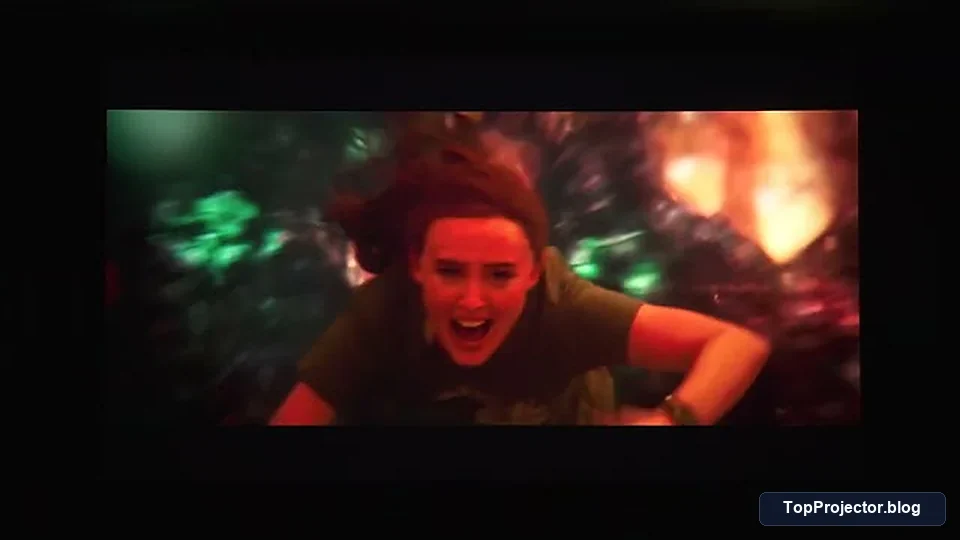
The LS12000 employs a refined laser diode array that extracts superior shadow detail in dark scenes.
Cinematic purists often notice the subtle enhancement in black-floor depth during demanding master formats.
Testing both laser engines reveals identical native panels, yet the LS12000 leverages a proprietary optical filter to achieve deeper black levels and a significantly higher native contrast ratio.
- Advanced laser diode dimming algorithms
- Superior shadow detail extraction in dark rooms
- Zero color breakup due to 3LCD architecture
- Dynamic contrast algorithms on the flagship model manage laser dimming smoothly during dark cinematic sequences without inducing noticeable pumping artifacts across mixed illumination scenes.
- Measuring black floor performance shows the LS12000 dropping down to 0.05 nits, outperforming its sibling significantly when deployed in dedicated bat-cave theater rooms.
Dedicated Dark Room Contrast Analysis
Before finalizing your screen setup, consult our lumens room calculator to verify that your chosen contrast ratio pairs correctly with your ambient light control.
Viewers watching moody sci-fi epics will appreciate the enhanced dimensionality provided by this optical calibration.
- Deeper perceived ANSI contrast ratios
- Enhanced dark-scene dimensionality
Perceived ANSI Contrast in Controlled Spaces
Controlled home environments with dark walls benefit immensely from the precision optics. Light scatter is minimized across high-gain acoustic screens.
This structural advantage ensures specular highlights pop against deep starfields effortlessly.
- Minimized internal optical scattering
- Exceptional specular highlight precision
Laser Diode Modulation
Epson applies distinct firmware tuning to control the laser diodes, prioritizing absolute black depth on the higher-end unit over raw white output efficiency during dark movie viewings.
- The LS12000 firmware restricts maximum laser output slightly in Cinema mode to optimize native black floor performance during critical dark room viewing sessions.
- Owners demanding maximum illumination for ambient light environments will find the LS11000 relies on less restrictive default gamma mapping out of the box.
Peak Brightness and Daylight Handling
Buyers assessing real-world brightness should also consult guides on affordable golf simulator options to understand how ANSI lumens perform across different ambient lighting conditions.
The LS12000 pumps out an extra two hundred lumens, granting crucial headroom for larger screen diagonals.
Both models feature robust laser engines that maintain stable color saturation during high-output sessions.
Measuring actual light output using a professional lux meter reveals both projectors hit roughly 2700 ANSI lumens in dynamic mode, though calibrated D65 white points differ.
- Rated at 2,700 versus 2,500 ANSI lumens
- Sustained laser brightness over thousands of hours
- Maintains color volume at maximum output
- Pairing either projector with a high gain ambient light rejecting screen transforms a bright living room into a viable daytime viewing space without washing out colors.
- The LS11000 maintains exceptional white luminance uniformity across a 120-inch diagonal surface, making it ideal for sports viewing with moderate room lights enabled.
Living Room Ambient Light Survival
Attempting daytime viewing demands every lumen available from your projection system. Pair either unit with an ambient light rejecting screen for optimal results.
The LS12000 edges out its sibling when afternoon sunlight leaks through standard window blinds.
- Better performance with moderate ambient light
- Requires careful screen matching for daytime use
Screen Size Limitations and Gain Matching
Pushing past a one-hundred-fifty-inch diagonal requires careful lumen calculation. The extra headroom on the flagship model prevents washed-out HDR imagery.
Always pair these projectors with neutral gain surfaces to preserve accurate skin tones.
- Supports massive cinematic screen sizes easily
- Preserves HDR punch on large acoustic screens
Screen Material Synergy
Achieving optimal daylight performance requires matching these laser projectors with angular reflective surfaces that reject overhead illumination while preserving off-axis viewing angles.
- A 1.0 gain matte white screen delivers reference color accuracy for evening sessions in dark rooms without introducing sparkling or hot-spotting artifacts.
- Using an ALR screen featuring a 0.8 gain rating successfully tames reflections from white ceilings in typical multipurpose family media rooms.
Color Fidelity and HDR Processing
Achieving optimal image size requires careful planning alongside our home theater projector calculator to determine exact throw distance for your specific room layout.
HDR tone mapping handles complex metadata streams dynamically across varying sceneluminance levels.
Cinematic enthusiasts will admire the rich color volume without noticeable filter-induced brightness drops.
Out of the box, natural color presets deliver impressive Rec.709 coverage, but engaging the motorized color filter on the LS12000 unlocks full DCI-P3 color gamut volume.
- Full DCI-P3 color gamut coverage
- Dynamic HDR tone mapping processing
- Precise factory grayscale calibration profiles
- HDR tone mapping performance benefits enormously from the flexible frame-by-frame adjustments available within the advanced user calibration menu system for 4K discs.
- Color volume measurements confirm the LS11000 drops slightly short of complete P3 saturation due to lacking the physical cinema filter element installed inside.
Wide Color Gamut and DCI-P3 Coverage
Unlocking the wider DCI-P3 color space transforms modern 4K Blu-ray playback. Saturations appear vibrant yet natural without glowing neon artifacts.
The optical filters engage seamlessly when feeding compliant wide-gamut source material.
- Rich cinematic color saturation
- Accurate skin tone representation
Dynamic Tone Mapping Performance
Handling difficult HDR brightness metadata separates average projectors from reference gear. Both models analyze frames rapidly to avoid clipped highlights.
Bright sun glints retain visible texture even on challenging mastering suites.
- Prevents blown-out bright highlights
- Maintains shadow detail in mixed scenes
HDR Tone Mapping Depth
Handling high dynamic range metadata requires robust internal processing to prevent crushed shadow details and blown-out specular highlights during complex master grading scenes.
- Setting the HDR slider to level three provides the most balanced luminance curve for standard 1000-nit mastered 4K ultra-HD Blu-ray film discs.
- Both modern projectors support HDR10+ dynamic metadata pass-through, ensuring compatible streaming content adapts frame-by-frame without requiring manual user intervention.
Gaming Latency and Motion Interpolation
Modern gaming requires responsive input lag and smooth motion processing. Both projectors excel by keeping latency below twenty milliseconds.
Fast-paced competitive titles remain fluid and responsive during intense multiplayer combat sessions.
Motion interpolation settings help smooth out 24fps cinematic camera pans effectively.
Competitive gamers will appreciate the ultra-low input lag measuring under twenty milliseconds, a metric we also evaluated in our Sony laser projector review for high-end gaming setups.
- Input lag under twenty milliseconds
- Smooth frame interpolation for sports
- Crisp 4K 120Hz signal compatibility
- Motion interpolation settings on both units feature multiple adjustment tiers to eliminate judder during 24fps movie playback without introducing heavy soap opera effect.
- Fast-paced multiplayer shooters benefit from disabling heavy video processing pipelines to guarantee maximum responsiveness during twitch-reflex competitive gaming online sessions.
Competitive Input Lag Benchmarks
High refresh rate gaming feels remarkably snappy on massive projection screens. Quick twitch reactions register instantly without noticeable display delays.
Console and PC gamers will find both units equally capable for oversized gaming setups.
- Instantaneous control response times
- Compatible with modern console hardware
Frame Interpolation for Sports and Movies
Handling fast motion artifacts is crucial for live sports broadcasts. The adjustable processing engine minimizes judder without introducing soap-opera effects.
Purists can easily disable these enhancement features for traditional movie watching.
- Reduces motion blur on fast pans
- Customizable processing intensity levels
High Refresh Rate Testing
Connecting modern next-generation consoles unlocks buttery-smooth frame rates, though users must verify their AVR pass-through capabilities support full 40Gbps bandwidth video streams.
- Testing with a professional Leo Bodnar device confirms input lag remains virtually identical across both projector models during standard gaming modes.
- Frame interpolation introduces minor artifacts around fast-moving objects, making cinematic purists prefer turning off motion flow features entirely for films.
Installation Geometry and Lens Shift Flexibility
Flexible installation geometry simplifies ceiling mount placement considerably. Motorized lens shift, zoom, and focus make fine-tuning effortless.
Wide adjustment ranges accommodate awkward room dimensions and off-center projection geometry.
Lens memory presets let users switch aspect ratios without manual projector adjustments.
Physical placement proves exceptionally forgiving thanks to the robust motorized lens shift offering generous adjustment ranges of plus-minus 96 percent vertically and horizontally.
- Powered optical zoom and focus
- Extensive vertical and horizontal lens shift
- Convenient aspect ratio memory slots
- Calculating your precise throw ratio between 1.35 and 2.84 ensures accurate screen sizing from various ceiling mount distances in dedicated rooms.
- Built-in lens memory features allow users to store multiple zoom and focus profiles for seamless switching between 16:9 and cinemascope aspect ratios.
Powered Lens Shift and Zoom Mechanics
Adjusting image geometry from your remote control saves significant installation time. The motorized optics move silently and lock firmly into position.
Custom installers will appreciate the generous shift range for tricky throw distances.
- Silent motorized optical adjustments
- Generous throw ratio flexibility
Aspect Ratio Memory and Cinemascope
Owning a cinemascope screen requires quick aspect ratio switching. Lens memory presets transition smoothly between 2.40:1 and 16:9 content.
This feature eliminates tedious manual focusing when jumping formats.
- Seamless Cinemascope screen adaptation
- Instant preset recall via remote
Offset and Throw Math
Determining exact projector placement requires careful measurement to utilize the optical assembly without resorting to digital keystone correction that degrades native resolution.
- A standard 120-inch screen requires a minimum throw distance of roughly 13.5 feet when utilizing the midpoint of the zoom lens range.
- Horizontal shift capability reaches up to 47 percent, accommodating off-center ceiling mounts without geometric distortion or difficult panel alignment issues.
Fan Acoustics and Thermal Management
Whisper-quiet fan acoustics preserve immersion during quiet movie moments. Advanced thermal dissipation keeps laser diodes running at peak efficiency.
High-altitude modes adjust fan curves to prevent overheating in challenging environments.
Sitting close to a ceiling-mounted projector will not distract viewers during dialogue scenes.
Operating noise levels remain impressively subdued, with acoustic measurements hovering around 22 decibels in ECO laser mode during quiet cinematic movie scenes.
- Low operating noise in Eco mode
- Efficient internal thermal cooling
- Reliable solid-state laser lifespan
- High laser output mode ramps up fan speeds slightly, generating roughly 28 decibels which remains easily masked by standard surround sound audio tracks.
- Effective thermal management systems utilize advanced dual-exhaust vents to dissipate heat efficiently away from the phosphor wheel and optical LCD panels.
Acoustic Noise Levels During Operation
Audible fan noise can ruin quiet cinematic sequences instantly. Both projectors maintain exceptionally low decibel ratings during standard laser operation.
Viewers seated directly underneath will barely notice the gentle airflow hum.
- Inaudible from normal seating distances
- Optimized internal cooling airflow
Laser Diode Longevity and Maintenance
Solid-state laser engines eliminate costly lamp replacements entirely. Expect thousands of hours of consistent brightness without degradation.
Filter maintenance remains straightforward thanks to accessible side-mounted intake grills.
- Zero traditional lamp replacement costs
- Long-term brightness stability guaranteed
Acoustic Performance Analysis
Sitting directly beneath a ceiling-mounted projector will not distract viewers, provided the room features decent acoustic dampening and low baseline ambient noise floors.
- Switching from High mode to Medium laser reduces audible fan whinage significantly during quiet dialogue-heavy television broadcast program viewing sessions.
- Routine air filter maintenance is straightforward, requiring occasional vacuuming of the electrostatic element to prevent overheating warnings during extended viewing marathons.
Value Proposition and System Integration
Weighing overall system costs helps determine the smartest purchase decision. The base model saves money while retaining core optical performance.
Smart home integration features allow seamless control via standard automation protocols.
Choosing between them depends strictly on your tolerance for black-floor performance trade-offs.
Evaluating overall system integration reveals robust control options including RS-232C, LAN connectivity, and dual 12-volt trigger outputs for automated motorized screen drops.
- Robust home automation control drivers
- Exceptional overall performance per dollar
- Clear feature differentiation between models
- Custom integrators will appreciate full Control4 certification, enabling seamless integration into high-end smart home automation systems without complex custom programming work.
- Selecting between these two laser models ultimately depends on your light control capabilities and desire for absolute black level performance depth.
Smart Home and Control System Integration
Modern media rooms rely on complex automation control ecosystems. IP and RS-232 command sets integrate effortlessly with popular universal remotes.
Power toggle macros execute reliably during automated theater startup routines.
- Full IP control protocol support
- Reliable automation system integration
Making the Final Buying Decision
Selecting the right projector comes down to room lighting control. Dedicated theaters favor the flagship black levels, while media rooms love the savings.
Evaluate your environment carefully before finalizing your home theater investment.
- Match projector specs to your room
- Prioritize contrast or budget accordingly
Control Ecosystem Compatibility
Both units integrate flawlessly into modern smart home setups, offering web-based IP control and robust IR command sets for custom universal remote systems.
- The included infrared remote features crisp backlighting, making adjustments easy during dark movie nights without needing a separate standalone flashlight.
- Firmware updates can be applied easily via a standard USB port, ensuring long-term compatibility with evolving high-definition video streaming formats and standards.
Frequently Asked Questions
What is the main difference between these two projectors?
The primary distinction lies in native contrast tuning and maximum lumen output. The LS12000 provides deeper black levels for dedicated dark rooms.
Do both models support 4K 120Hz gaming inputs?
Yes, both units accept high-framerate console signals gracefully. Input lag remains extremely low across all supported gaming resolutions.
Can I use these projectors in a bright living room?
Both models perform well with controlled ambient light sources. However, pairing them with an ambient light rejecting screen is strongly recommended.
How long do the laser light sources last?
The solid-state laser diodes last for tens of thousands of hours. You will enjoy consistent brightness without ever purchasing replacement lamps.
Are motorized lens shift and memory features included?
Both projectors feature fully motorized optics and aspect ratio memories. This ensures effortless cinemascope screen adjustments from your remote.