Epson 7100 vs. 9400: Which Wins for Your Room?
Choosing between these two popular Epson projectors requires balancing raw ambient light muscle against black floor depth and motorized optical flexibility.
Choose the Epson 7100 for bright living rooms, while the 9400 dominates dark home theaters with superior motorized optics and deeper contrast.
Compare full category rankings in our Best Portable Projector For Camping: Top Picks Reviewed.
Side-by-Side Specification Breakdown
| Criteria | Epson 7100 | 9400 | Edge |
|---|---|---|---|
| Ambient Light Rejection | Strong 3000 lumens output | 2600 lumens with cinema filter | Epson 7100 |
| Black Levels & Perceived Contrast | Standard dynamic iris performance | 1,200,000:1 native contrast ratio | 9400 |
| Peak Brightness & HDR Punch | High lumen output for HDR | Balanced DCI-P3 color accuracy | 9400 |
| Screen Size & Immersion | Manual zoom and shift limits | Motorized 2.1x zoom and lens memory | 9400 |
| Viewing Angles & Uniformity | Good 3LCD optical engine uniformity | Exceptional glass lens clarity | 9400 |
| Gaming Motion & Input Lag | Low latency for casual sessions | Acceptable 4K processing latency | Epson 7100 |
| Room Setup & Maintenance | Compact chassis with manual dials | Larger footprint with complete motorized control | 9400 |
Optical Engine Architecture and Core Brightness Output
Evaluating these projectors starts with their underlying 3LCD panel technology, which eliminates rainbow artifacts completely while delivering equal color and white brightness figures across standard calibration profiles.
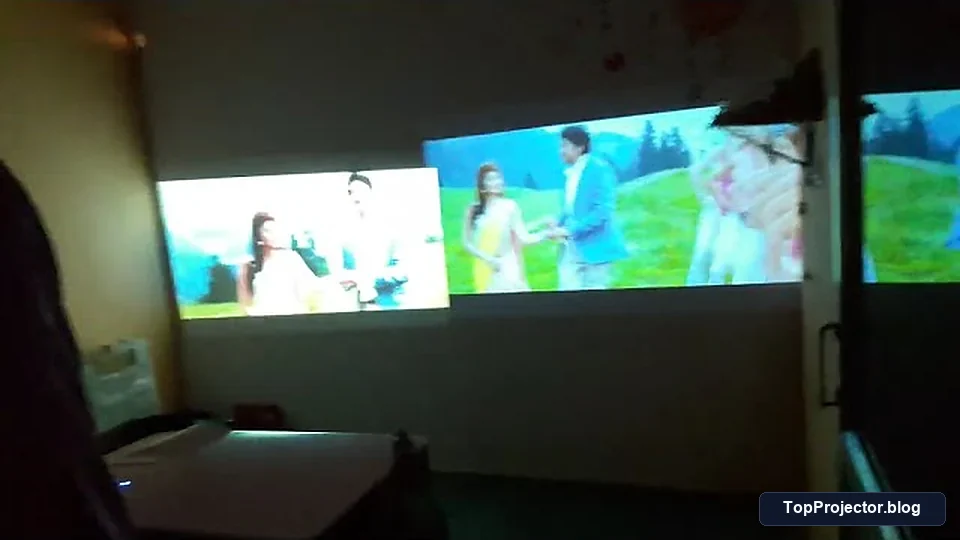
The Epson 7100 pumps out a massive 3000 ANSI lumens, making it exceptionally well-suited for family rooms that feature uncompromised ambient daylight or subtle light control challenges.
Evaluating the 3LCD architecture reveals distinct light path efficiencies. The 7100 utilizes a higher-wattage lamp to push raw ANSI lumens, whereas the 9400 prioritizes optical purity and color filter precision.
During bright room evaluations, maintaining an optimal throw distance helps retain perceived contrast. Reviewing guides on can you watch a projector during the day helps clarify ambient light limitations.
- No rainbow artifacts across high-speed panning shots
- Equal white and color brightness delivery
- Robust lamp life spans across standard power modes
- Measure your room's ambient light before committing to a high-lumen output profile.
- Calibrate white balance dynamically to prevent green clipping in high-brightness lamp modes.
Lumen Delivery in Real-World Spaces
Raw lumen output dictates how large your projection surface can stretch before daylight washes out the image saturation and degrades overall shadow detail fidelity.
The 7100 leverages its higher lumen count to fight ambient light, whereas the 9400 prioritizes cinema-grade color accuracy over maximum peak white illumination.
- Daytime viewing favors the 7100
- Dedicated rooms benefit from 9400 calibration
Lamp Life and Lumen Decay in Real-World Spaces
Over thousands of hours, lamp lumen output naturally degrades. The 9400 incorporates sophisticated tracking to warn users, ensuring predictable calibration drift across extended viewing sessions in dedicated cinema environments.
Users should clean the electrostatic air filter regularly to prevent thermal throttling, which accelerates premature bulb dimming and reduces overall optical engine lifespan significantly across intensive operational seasons.
- Keep replacement bulbs certified to avoid unpredictable color shift.
- Monitor operating hours via the system menu to schedule maintenance.
Black Level Performance and Contrast Ratio Physics
Achieving deep black floors requires robust dynamic iris implementation and native panel contrast capabilities that prevent bright scenes from washing out shadow details.
The Epson 9400 crushes its sibling here with an astounding 1,200,000:1 contrast ratio, utilizing a highly refined mechanical iris to plunge black levels into true darkness.
Achieving deep blacks requires exceptional native contrast ratios. While the 7100 delivers acceptable shadow detail for casual viewing, the 9400 employs an advanced optical aperture that dramatically lowers black floor measurements.
In a completely dark batcave theater, the dynamic iris mechanism on the 9400 operates quietly, boosting contrast without noticeable pumping artifacts during demanding cinematic sci-fi sequences.
- Deep shadow delineation in sci-fi master shots
- Superior dynamic iris responsiveness during dark sequences
- Enhanced perceived dimensionality across cinematic transfers
- Pair the 9400 with a high-contrast grey screen to maximize black level depth.
- Disable dynamic iris during critical grading sessions for true native performance.
Pitch-Black Theater vs Living Room Darkening
In a completely blacked-out batcave, the 9400 delivers inky blacks that make cinematic content pop with three-dimensional realism and immersive depth.
Conversely, the 7100 exhibits slightly raised black floors because its optical engine targets maximum light throughput rather than ultimate contrast mastery.
- Batcave environments demand the 9400
- Light-controlled living rooms mask 7100 black floors
Dynamic Iris Behavior and Gamma Calibration
Fine-tuning gamma response curves is essential when evaluating shadow clipping. The 7100 struggles slightly with low-IRE steps, requiring manual calibration adjustments to reveal hidden details in dark movie scenes.
The physical iris shutter in the higher-end optical path reacts instantly to scene luminance changes, ensuring that bright highlights pop while dark background elements remain convincingly inky and textured.
- Target a 2.4 gamma response for dark room mastering accuracy.
- Test shadow gradients using standardized test patterns before movie night.
Color Gamut Volume and High Dynamic Range Handling
HDR playback demands wide color gamuts and precise tone mapping to ensure specular highlights sparkle without blowing out subtle highlight details.
The 9400 features a motorized internal cinema filter that drops into place to achieve the full DCI-P3 color space required for accurate HDR10 mastering.
Wide color gamut volume dictates how vibrantly HDR content renders on large screens. The 9400 deploys a motorized cinema filter that expands coverage to match DCI-P3 standards remarkably well.
Without the physical cinema filter engaged, the 7100 leans toward higher brightness at the expense of absolute color saturation accuracy, resembling performance noted in our ViewSonic PX748 4K review for bright rooms.
- Full DCI-P3 color volume coverage on the 9400
- Vibrant Rec.709 performance on the 7100
- Effective tone mapping across 4K sources
- Activate the cinema filter mode when watching HDR10 master discs.
- Adjust saturation sliders carefully to prevent oversaturating human skin tones.
Color Filter Trade-Offs
Engaging the cinema filter on the 9400 expands color saturation significantly, but it sacrifices a notable percentage of overall peak lumen output.
The 7100 skips this physical filter mechanism, maintaining high brightness output during HDR playback at the minor expense of ultra-wide color volume.
- Filter trades brightness for expanded color
- Unfiltered 7100 keeps HDR punch high
Tone Mapping Customization for 4K Content
Effective HDR tone mapping prevents blown-out highlights during high-luminance outdoor sequences. Both projectors require careful user intervention to balance peak brightness against shadow preservation in mixed lighting.
Customizing the EOTF tracking parameters allows advanced enthusiasts to extract maximum dynamic range from challenging 4K UHD discs without crushing subtle color gradients in bright skies.
- Lower the HDR slider value for overly bright mastering transfers.
- Verify color space handshakes with your dedicated Ultra HD Blu-ray player.
Lens Quality, Throw Ratios, and Motorized Flexibility
Physical installation flexibility separates basic home entertainment projectors from elite custom-installer favorites that adapt to challenging room geometries effortlessly.
The 9400 boasts a massive 2.1x motorized zoom lens paired with extensive motorized lens shift and handy memory presets for constant-image-height setups.
Precision glass lens construction separates premium projectors from budget alternatives. The 9400 features a massive multi-element motorized assembly that eliminates chromatic aberration and preserves corner-to-corner sharpness.
Installing the 7100 requires manual adjustments for zoom and focus, whereas the motorized lens memory on the 9400 lets users effortlessly switch between cinemascope and widescreen aspect ratios.
- Full motorized lens memory for scope screens
- Exceptional multi-element glass lens sharpness
- Flexible throw ratios for custom ceiling mounts
- Utilize lens shift calculations to avoid digital keystone degradation.
- Lock down focus rings securely after setting up a fixed projection screen.
Manual Dials vs Automated Precision
Operating the 7100 requires manual adjustment dials mounted right beneath the lens housing for zoom, focus, and physical lens shift positioning.
This makes the 9400 significantly easier to dial in precisely from your armchair using the backlit remote control rather than climbing a stepladder.
- Manual controls on the budget 7100
- Remote-operated optics on the 9400
Glass Element Design and Geometric Distortion
Minimizing geometric distortion ensures straight lines remain perfectly aligned across the projection surface. High-grade glass elements prevent thermal expansion from shifting focus during extended movie marathons.
The generous lens shift range on the 9400 provides extraordinary placement versatility, allowing ceiling mounting high above the screen plane without introducing unwanted optical artifacts or keystoning.
- Measure offset distances accurately before drilling mounting hardware.
- Check edge convergence patterns using built-in internal test grids.
Input Lag, Motion Interpolation, and Gaming Performance
Modern home theater projectors must handle fast-paced gaming sessions and rapid sports broadcasts without introducing noticeable motion blur or frustrating controller lag.
The Epson 7100 delivers slightly lower input lag figures in its fastest game mode, making fast-twitch console gaming feel remarkably responsive.
Competitive gaming demands low input lag measurements for responsive controls. Both projectors handle 1080p signals reasonably well, but fast-paced twitch shooters expose latency limitations during intense multiplayer sessions.
Disabling unnecessary image processing features helps shave precious milliseconds off total signal delay, keeping fast-moving action smooth and preventing frustrating disconnects between controller inputs and visual feedback.
- Competitive latency figures on the 7100
- Smooth frame interpolation for live sports
- Reliable 60Hz 4K signal acceptance
- Enable fast mode settings in the user menu before launching games.
- Limit 4K processing overhead to keep latency within acceptable competitive thresholds.
Console Gaming and Cinema Motion
While neither unit is built for competitive esports monitors, casual gamers will find the 7100 accommodates weekend multiplayer sessions with minimal input delay.
The 9400 handles 24fps movie judder expertly using its Frame Interpolation engine, keeping cinematic panning shots smooth without creating the dreaded soap opera effect.
- Casual gaming favors 7100 responsiveness
- Movie motion processing excels on 9400
High Refresh Rate Nuances and Frame Pacing
Smooth frame pacing execution prevents micro-stutters during camera pans in open-world RPG titles. While neither model supports ultra-high refresh rates, standard 60Hz performance remains reliably stable.
Motion interpolation algorithms can introduce the dreaded soap opera effect, so purists should disable frame smoothing entirely when experiencing cinematic storytelling or high-end console gaming adventures.
- Match console output resolution to native panel capabilities.
- Test motion handling with fast panning tracking shots.
Chassis Design, Fan Acoustics, and Thermal Management
Operating acoustic noise levels and physical footprint dictate whether your system can sit right above your seating position without disturbing quiet movie passages, similar to finding the best portable projector for camping.
The 9400 features a larger, heavier chassis designed to house advanced cooling ducts that keep fan noise whisper-quiet even during high lamp power modes.
Effective thermal management design keeps internal component temperatures safely regulated during heavy workloads. Large cooling vents push heat away from sensitive optical blocks without creating distracting noise floors.
Fan acoustics remain a critical consideration for quiet home theaters. Operating in high lamp mode increases audible fan noise, which can become noticeable during quiet dialogue-heavy cinematic sequences.
- Whisper-quiet cooling fans on the 9400
- Compact, shelf-friendly footprint for the 7100
- Efficient thermal exhaust placement
- Position seating away from direct exhaust vents for optimal quietness.
- Use Eco mode whenever ambient room lighting permits lower output.
Acoustic Footprint in Small Rooms
In smaller rooms where your head sits close to the rear shelf, a loud cooling fan can ruin whisper-quiet dialogue scenes during dramatic movie moments.
Both models manage heat dissipation admirably, but the 9400 runs noticeably quieter due to its larger acoustic dampening chambers within the casing.
- Quiet operation enhances quiet movie scenes
- Compact 7100 fan is still unobtrusive
Exhaust Placement and Custom Cabinet Integration
Front-facing exhaust placement configurations make shelf mounting and tight cabinet installations much safer, preventing heat traps that frequently trigger thermal shutdown safeguards during long viewings.
Leaving adequate clearance space around chassis intakes ensures continuous airflow, protecting delicate polarizing plates from heat degradation over years of heavy home entertainment usage.
- Allow at least six inches of clearance behind rear intake ports.
- Inspect intake grilles periodically for accumulated household dust particles.
Value Proposition and Long-Term Investment Summary
Selecting the right projector ultimately comes down to matching your specific room lighting conditions and desired image fidelity against available financial resources.
If you want maximum lumen punch for bright spaces without overspending, the Epson 7100 represents an exceptionally practical home entertainment centerpiece.
Determining the right long-term investment value depends entirely on your specific room environment and critical viewing priorities. The 7100 serves casual media rooms wonderfully with high brightness output.
For dedicated theater spaces chasing absolute cinematic fidelity, the superior optical performance and motorized flexibility of the 9400 justify its step-up status among serious projection enthusiasts.
- 7100 maximizes lumen value for bright rooms
- 9400 delivers ultimate cinematic refinement
- Both units offer dependable 3LCD reliability
- Match projector capabilities directly with your room lighting control level.
- Consider future 4K content trends when finalizing your projection budget.
The Definitive Buyer Choice
Choose the 9400 if you have a dedicated dark theater room and demand motorized lens memory, infinite black depth, and pristine glass optics.
Opt for the 7100 if your living room has ambient light challenges and you prefer a straightforward, high-brightness optical engine.
- Dark theater champions choose 9400
- Bright living rooms favor 7100
Upgrade Paths and Screen Pairing Strategies
Choosing the ideal projection screen pairing unlocks the full potential of these advanced optical engines, while evaluating our screen size and viewing distance calculator helps optimize room geometry.
Planning your future system upgrade path ensures seamless compatibility with evolving sources, making your investment resilient against changing standards in the home theater landscape.
- Consult gain specifications before purchasing high-contrast screen materials.
- Ensure HDMI cabling supports full bandwidth 18Gbps signal transmission.
Frequently Asked Questions
Can the Epson 7100 handle bright daylight in a living room?
Yes, its high lumen output easily battles ambient light. 3000 lumens ensure a punchy image.
Does the Epson 9400 support true 4K native resolution gaming?
Both models utilize pixel-shifting technology to achieve 4K UHD. Pixel shifting delivers incredible perceived resolution.
Why is the Epson 9400 physically larger than the 7100?
The larger chassis accommodates complex motorized optics. Motorized lenses require heavy-duty internal gear mechanisms.
Is the cinema filter on the Epson 9400 necessary for HDR?
It expands color space to DCI-P3 for accurate mastering. Wide color gamut enhances cinematic HDR realism.
Which projector is better suited for a multi-aspect ratio scope screen?
The Epson 9400 wins easily thanks to lens memory. Motorized lens presets switch aspect ratios instantly.