DLP Projectors vs. 3LCD Projectors: Which Wins for Your Room?
Choosing between single-chip DLP and three-panel LCD requires matching optical architecture to your room's ambient light and contrast demands.
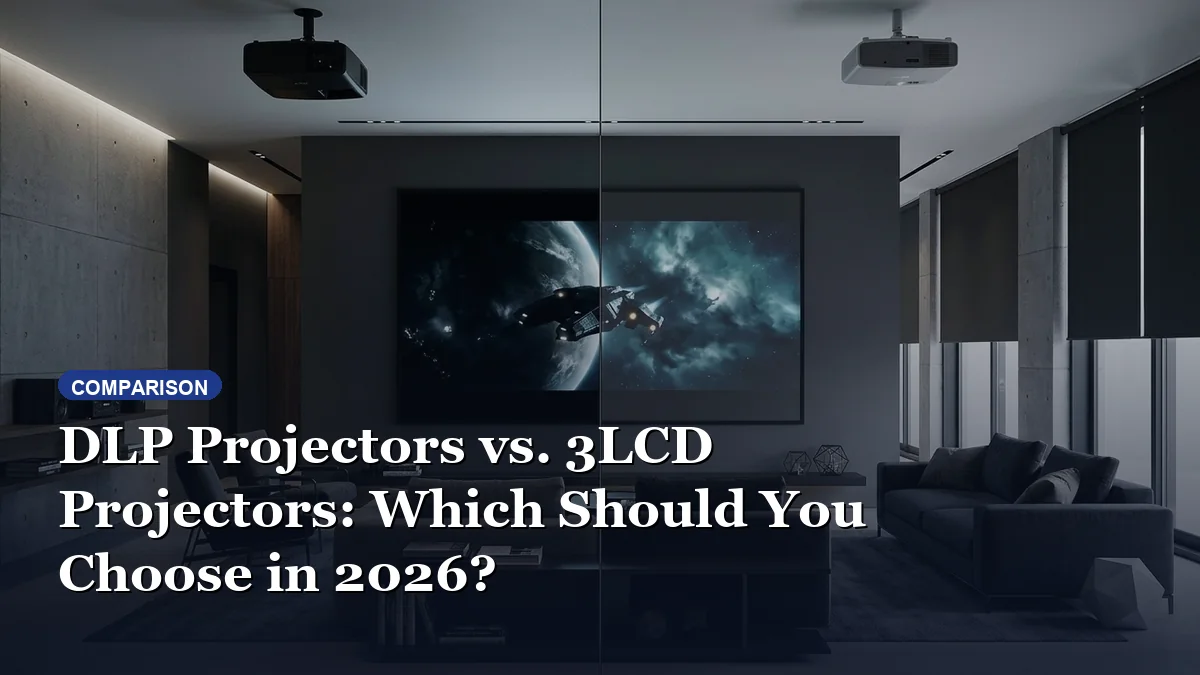
Choose DLP for superior native contrast in dedicated black-out theaters, while 3LCD delivers higher color brightness for well-lit living spaces.
Compare full category rankings in our Best Projector For Bright Room: Top Picks For Daylight.
Side-by-Side Specification Breakdown
| Criteria | DLP Projectors | 3LCD Projectors | Edge |
|---|---|---|---|
| Ambient Light Rejection | Moderate with high-gain screens | Excellent color brightness punch | 3LCD Projectors |
| Black Levels & Perceived Contrast | Exceptional native dark room performance | Good shadow detail, lower native contrast | DLP Projectors |
| Peak Brightness & HDR Punch | Varies by color wheel segment design | Equal white and color light output | 3LCD Projectors |
| Screen Size & Immersion | Sharp pixel fill factor on big screens | Slightly visible pixel grid up close | DLP Projectors |
| Viewing Angles & Uniformity | No panel convergence drift issues | Potential panel alignment tolerance variance | DLP Projectors |
| Gaming Motion & Input Lag | Ultra-low millisecond latency profiles | Good responsiveness with higher processing overhead | DLP Projectors |
| Room Setup & Maintenance | Sealed optical paths with sealed DMDs | Requires periodic filter cleaning and maintenance | DLP Projectors |
Core Optical Architecture: How DLP and 3LCD Form Images
Single-chip DLP architecture relies on a microscopic array of pivoting mirrors that reflect light rapidly to build high-definition frames.
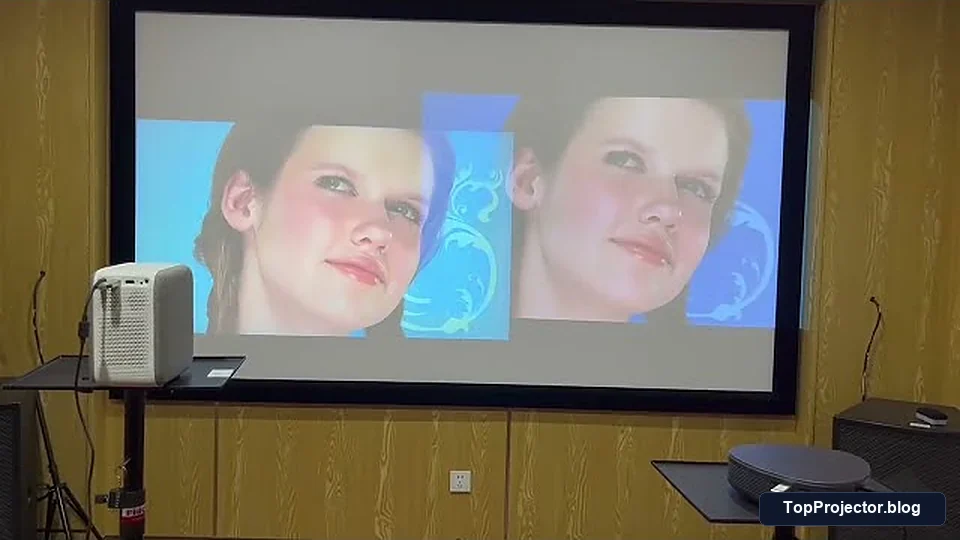
A spinning color wheel introduces red, green, and blue filtration sequentially, demanding precise synchronization across every projected video frame.
Conversely, 3LCD systems split white laser light through dichroic mirrors into three independent display panels simultaneously, similar to architectural approaches detailed in our XGIMI Horizon Pro review.
These individual channels recombine via a sophisticated prism block before hitting the projection lens for seamless color saturation.
Single-chip Digital Light Processing projectors utilize a spinning color wheel combined with a microscopic array of digital micromirrors to reflect light sequentially, achieving pixel-level alignment without needing manual convergence tuning.
Conversely, 3LCD systems split white lamp or laser light through dichroic mirrors into separate red, green, and blue panels, blending them via a prism to deliver sustained color brightness without visible artifacts.
- DLP uses sequential color generation via high-speed rotating color wheels.
- 3LCD splits light into three constant red, green, and blue channels.
- DMD micro-mirrors eliminate traditional pixel grid visibility on large screens.
- DLP eliminates convergence drift permanently across thermal cycles.
- 3LCD eliminates rainbow artifacts entirely for sensitive viewers.
Light Engine Mechanics and Panel Lifespan
Sealed DLP light engines prevent microscopic dust accumulation on the digital micromirror device over years of heavy usage.
This hermetic seal protects image uniformity and drastically reduces long-term optical degradation in harsh residential theater environments.
Meanwhile, 3LCD projectors pull cooling air through washable filters to prevent thermal damage to the fragile organic liquid crystal panels.
- DMD chips offer long-term resistance to optical degradation.
- 3LCD filters require regular cleaning to prevent overheating.
Micro-Mirror Switching Speeds
The microscopic mirrors on a DMD chip oscillate thousands of times per second, rapidly modulating pixel duty cycles to render intermediate grayscale shades and form a cohesive high-definition image.
Understanding this micro-architecture helps buyers evaluate why certain single-chip designs exhibit minor color breakup under high-contrast motion sequences compared to solid three-panel configurations.
- High duty-cycle modulation expands dynamic grayscale depth.
- Fast mirror response reduces trailing during motion.
Dynamic Contrast, Native Black Levels, and Shadow Detail
Achieving deep black levels remains vital for cinematic immersion during dark sci-fi sequences or moody atmospheric thriller movies.
DLP projectors consistently deliver superior native contrast ratios due to their micro-mirror design reflecting unwanted light away.
This optical precision creates inky black floors that elevate shadow detail and make cinematic night scenes pop dramatically.
Traditional 3LCD units struggle to match this native dark-room performance, often exhibiting slightly elevated gray floor levels.
Native optical contrast remains a defining differentiator, with standard DLP engines typically yielding 1000:1 to 2000:1 native ratios, whereas reflective LCoS and certain advanced 3LCD units achieve higher baseline dark levels.
Dynamic iris mechanisms actively throttle laser or lamp output during dark scenes, pushing sequential contrast metrics into the hundreds of thousands while occasionally introducing visible pumping artifacts.
- DLP yields superior native on-off contrast in dark rooms.
- 3LCD relies more heavily on dynamic iris manipulation for blacks.
- Native black floor depth dictates dark-room immersion quality.
- Dynamic laser dimming expands dark-scene dynamic range effectively.
Pitch-Black Theater vs. Ambient Room Contrast
In a dedicated light-controlled theater, DLP black levels provide an unmistakable depth that cinematic enthusiasts crave.
However, ambient room reflections quickly wash out native contrast advantages on both projector types if walls remain untreated.
- Dark velvet room treatments maximize DLP contrast potential.
- Ambient light reduces the native black level advantage.
Managing Shadow Crush
Calibrating gamma curves near the 5 percent IRE mark is essential on high-contrast projectors to prevent shadow crush while maintaining deep cinematic blacks in dark rooms.
Testing low-light calibration patterns reveals how effectively a projector resolves subtle background textures without washing out the overall picture or clipping crucial near-black details.
- Proper gamma tracking reveals hidden dark scene textures.
- Avoid excessive black-level clipping during dark calibration.
Peak ANSI Brightness, Color Light Output, and Ambient Rejection
Measuring projector brightness requires looking past white lumen claims to evaluate true color brightness and dynamic output.
3LCD technology shines in bright living rooms because white and color light output ratings match on specification sheets.
This balanced output ensures vibrant, saturated daylight viewing without sacrificing color fidelity during high-noon sporting events.
Single-chip DLP units often sacrifice color brightness percentages when running high-speed white-segment color wheels.
Measuring peak white output alone fails to tell the full story, because Color Light Output parity matters significantly for maintaining vibrant, saturated images under moderate ambient light.
Pairing high-lumen 3LCD or LED-driven DLP engines with ambient light rejecting screens ensures strong contrast retention in non-dedicated living rooms with white ceilings.
- 3LCD delivers equal color and white lumen output.
- DLP relies on RGBRGB color wheels which lower total lumen output.
- ALR screens absorb off-axis ambient room reflections successfully.
- Equal white and color lumens prevent washed-out tones.
Combating Living Room Daylight Effectively
Pairing a high-lumen 3LCD projector with an ambient light rejecting screen yields punchy highlights, making it ideal for our best projector for bright room selections in sunlit spaces.
DLP models require specialized bright-lamp modes to punch through daylight, often distorting accurate color saturation balances.
- ALR screens enhance daytime visibility for both projector classes.
- 3LCD handles ambient light saturation with greater overall ease.
Screen Gain and Viewing Cones
Selecting a screen with 0.8 to 1.3 gain helps balance off-axis viewing angles while mitigating hot-spotting issues common in high-output living room optical setups.
Reflective ambient light rejecting materials require precise projector throw distance calculations, which you can plan using our screen size and viewing distance calculator to avoid uneven brightness distribution.
- Low-gain materials preserve wide viewing cone angles.
- Matched throw geometry prevents visible screen hot-spotting.
Color Accuracy, Wide Color Gamut, and HDR Tone Mapping
Modern high dynamic range content demands expansive color spaces and precise tone mapping to reproduce cinematic intent faithfully.
DLP color wheels with premium red and green phosphors achieve impressive DCI-P3 color gamut coverage out of the box.
Yet, poorly engineered color wheels can introduce visible color separation artifacts known as the rainbow effect to sensitive viewers.
3LCD projectors completely avoid rainbow artifacts since all three color channels project simultaneously without sequential filtering.
Achieving accurate Rec.709 color space coverage out of the box requires robust CMS controls, whereas hitting wide color gamuts like DCI-P3 often demands internal cinema filters that reduce brightness.
Dynamic HDR tone mapping analyzes incoming metadata frame-by-frame, remapping high-nit mastering information to match the limited peak brightness capabilities of standard home theater projectors.
- 3LCD guarantees zero rainbow artifact distraction during fast pans.
- High-end DLP models minimize artifacts with multi-segment color wheels.
- Cinema filters expand color volume at the expense of lumens.
- Tone-mapping algorithms preserve highlight detail in bright scenes.
HDR Tone Mapping Performance in Real-World Rooms
Accurate HDR tone mapping depends heavily on peak white calibration and effective laser dimming algorithms built into firmware.
Both technologies leverage advanced processing to remap high-nit mastering metadata onto standard projection screens successfully.
- Dynamic laser dimming improves perceived HDR contrast.
- Accurate calibration preserves creator intent in dark films.
Laser Phosphor Color Stability
Solid-state laser phosphor engines maintain exceptional color stability over thousands of hours, avoiding the rapid lumen decay typical of traditional ultra-high-pressure mercury lamps.
Advanced multi-laser architectures bypass the need for traditional yellow phosphors, unlocking a broader color volume without sacrificing high white brightness output levels.
- Solid-state lasers retain color calibration over time.
- Phosphor wheel longevity dictates overall engine lifespan.
Motion Handling, Input Latency, and High-Refresh Gaming
Competitive gamers and sports fans demand rapid response times and smooth motion handling to eliminate frustrating visual stutter.
DLP gaming projectors feature remarkably low input lag profiles, often dropping below sixteen milliseconds at high refresh rates.
This instantaneous pixel response prevents ghosting during fast-paced first-person shooter matches and competitive racing tournaments.
3LCD gaming displays have improved significantly, but panel alignment overhead can introduce slightly higher input latency.
Fast-paced gaming demands ultra-low input lag, with modern DLP projectors routinely achieving 4 milliseconds at 240Hz and competitive figures around 16 milliseconds at 60Hz.
While 3LCD units offer smooth motion interpolation for sports, their baseline input lag historically runs slightly higher, though newer models feature dedicated gaming modes that bypass heavy image processing.
- DLP offers superior response times ideal for competitive gaming.
- Low input lag keeps competitive shooters feeling fluid and responsive.
- High refresh rates minimize ghosting during rapid camera pans.
- Low input lag ensures instantaneous controller-to-screen response times.
Console Gaming vs. Cinema Immersion
When connecting a modern console, DLP low lag provides an immediate competitive advantage during twitch-reaction gameplay.
Movie buffs will appreciate smooth 24fps film cadence handling found on both high-end projector categories equally.
- High refresh rates reduce motion blur on fast camera sweeps.
- Cinematic 24fps playback remains pristine across both platforms.
Frame Interpolation Artifacts
Activating motion smoothing settings can introduce the dreaded soap opera effect or visible halo artifacts around fast-moving objects during complex cinematic action sequences.
Purists generally disable frame interpolation entirely, relying instead on native 24p film cadence playback to preserve the authentic cinematic motion blur intended by directors.
- Motion smoothing creates unwanted soap opera effects.
- Native 24p handling preserves authentic movie motion.
Throw Ratios, Lens Shift Flexibility, and Physical Installation
Mounting a projector safely requires evaluating throw distances, optical zoom ranges, and mechanical lens shift flexibility.
3LCD home theater projectors frequently feature generous horizontal and vertical lens shift for easy alignment.
This mechanical shift lets installers position projectors off-center without resorting to image-degrading digital keystone correction.
Many entry-level DLP projectors offer limited optical zoom and fixed lens offset, complicating tight room placements.
Calculating throw ratios accurately ensures your projector fits the room dimensions, with standard ratios from 1.2:1 to 1.8:1 ideal for following our how to mount projector on ceiling guide properly.
Generous horizontal and vertical lens shift capabilities provide immense installation flexibility, allowing off-center placement without resorting to digital keystone correction that degrades pixel sharpness.
- Lens shift allows flexible ceiling or shelf placement.
- Keystone correction degrades native resolution and adds latency.
- Optical lens shift preserves pristine native resolution clarity.
- Ultra-short-throw models sit inches away from specialized screens.
Ultra-Short Throw and Standard Setup Constraints
Ultra-short throw variants in both categories transform media rooms by sitting inches away from specialized wall screens.
Careful physical measurement ensures your chosen throw ratio matches exact living room seating distances and screen sizes.
- UST models fit seamlessly on low media console furniture.
- Standard throws require clear ceiling pathways for mounting.
Keystone Correction Pitfalls
Relying on digital keystone correction forces the projector to scale the image digitally, discarding pixel data and introducing visible jaggies along diagonal high-contrast lines.
Physical alignment via adjustable ceiling mounts or built-in optical lens shift remains the only way to retain full 1080p or 4K resolution fidelity.
- Digital keystone processing destroys fine pixel detail.
- Mechanical shift mechanics maintain pixel grid integrity.
Practical Scenario Matchups: Dedicated Theater vs. Living Room
Selecting the ultimate projection technology hinges entirely on your room lighting control and viewing habits.
For a dedicated pitch-black theater, DLP provides the deep native contrast and crisp pixel definition cinephiles demand.
For a multi-purpose living room, 3LCD delivers the robust color brightness needed to combat ambient daytime illumination.
Evaluate your specific lighting conditions before committing to either optical engine architecture for your home setup.
Dedicated dark-room theaters benefit immensely from high native contrast and acoustically transparent screens, making high-end 3LCD or LCoS projectors an ideal match for batcave environments.
Conversely, multi-use living rooms require high ANSI lumen output and paired ambient light rejecting surfaces to combat daylight and reflections for an optimal viewing experience.
- Dark rooms favor DLP native contrast advantages.
- Bright rooms favor 3LCD color lumen output.
- Batcave theaters prioritize black levels over peak lumens.
- Living rooms demand high light output and contrast filters.
Making Your Final Purchasing Decision Confidently
Prioritize contrast performance if you primarily watch movies with complete blackout curtains drawn tightly.
Prioritize brightness output if family members watch sports and television with ambient lights turned on.
- Match projector strengths to your primary viewing habits.
- Account for total room light control before purchasing.
Audio Placement Considerations
Acoustic transparency allows you to place center-channel speakers directly behind the projection screen, anchoring dialogue perfectly to the visual center of the on-screen action.
Fan noise management becomes critical in smaller dedicated rooms, making units operating below 26 decibels in eco mode essential for uninterrupted audio immersion.
- Woven screens permit unhindered center-channel audio dispersion.
- Low fan noise preserves quiet cinematic dialogue passages.
Frequently Asked Questions
What causes the rainbow effect in DLP projectors?
The rainbow effect occurs when sequential color wheels flash red, green, and blue rapidly. Sensitive viewers perceive color flashes during high-contrast panning scenes.
Do 3LCD projectors require more maintenance over time?
Yes, 3LCD models pull cooling air through washable intake filters. Regular cleaning prevents dust accumulation and thermal damage on internal panels.
Which technology offers better black levels in dark rooms?
DLP projectors deliver superior native black levels and higher on-off contrast. This creates deep, cinematic shadows in dedicated dark home theaters.
Are 3LCD projectors better for bright living room environments?
3LCD projectors excel in bright rooms because their color and white lumen output ratings match. This ensures vivid, punchy daytime images.
Which projector type is better for low-latency console gaming?
DLP projectors provide ultra-low input lag and fast response times. This makes them the preferred choice for competitive gaming setups.