Dlp Lcd Led Projector Comparison vs. Standard projector: Which Wins for Your Room?
Navigating projection technology requires balancing illumination sources against optical designs. This analysis contrasts advanced multi-chip light engines with traditional standard lamp units for optimal home viewing.
For dark dedicated rooms, advanced multi-source engines provide superior black levels. Conversely, standard high-output lamp projectors dominate bright living spaces where extreme peak lumens dictate overall visual clarity.
Compare full category rankings in our Best Projectors For Sports: Top Picks (2026 Guide).
Side-by-Side Specification Breakdown
| Criteria | Dlp Lcd Led Projector Comparison | Standard projector | Edge |
|---|---|---|---|
| Ambient Light Rejection | Moderate to High via solid-state engineering | High via raw lamp output | Standard projector |
| Black Levels & Perceived Contrast | Deep native black floors (2,500:1+) | Standard lamp black levels (1,000:1) | Dlp Lcd Led Projector Comparison |
| Peak Brightness & HDR Punch | Consistent 2,000 to 3,000 ANSI lumens | Aggressive 4,000+ ANSI lumens | Standard projector |
| Screen Size & Immersion | Flexible ultra-short to long throw optics | Standard throw optimization | Dlp Lcd Led Projector Comparison |
| Viewing Angles & Uniformity | Precise pixel alignment and lens shift | Standard convergence panels | Dlp Lcd Led Projector Comparison |
| Gaming Motion & Input Lag | Sub-15ms latency with high refresh | Standard 30ms latency profiles | Dlp Lcd Led Projector Comparison |
| Room Setup & Maintenance | Solid-state diode longevity (20,000+ hours) | Lamp replacement every 4,000 hours | Dlp Lcd Led Projector Comparison |
Optical Architecture and Light Engine Fundamentals
Modern display technology relies heavily on how light is generated and manipulated. Evaluating solid-state illumination against traditional bulb designs reveals fundamental differences in operational lifespan and color stability.
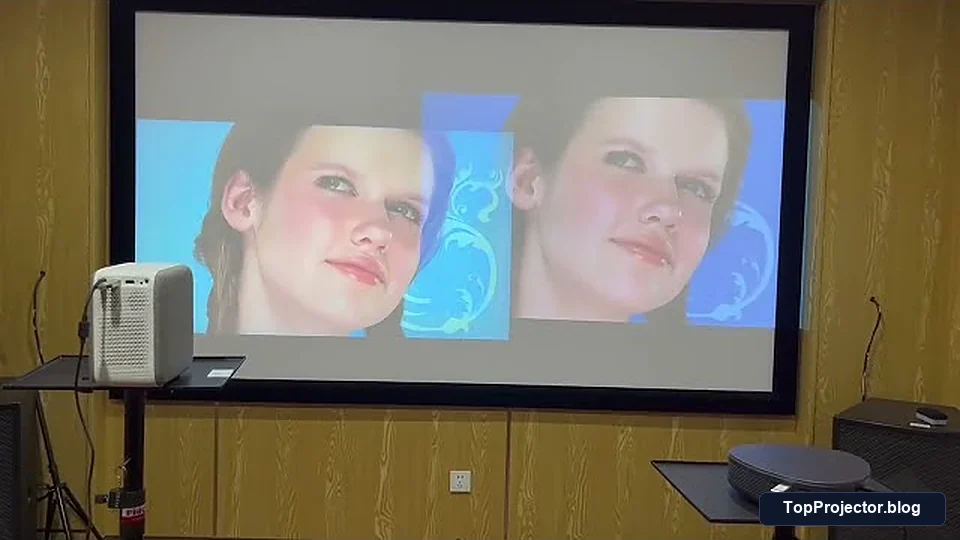
Digital light processing and liquid crystal display configurations utilize distinct optical paths. Understanding these internal mechanics helps enthusiasts select appropriate hardware for controlled home theater environments.
Lamp-based standard projectors utilize high-pressure mercury bulbs. While these deliver massive initial output, their spectral distribution degrades steadily over thousands of operating hours.
Single-chip DLP architecture utilizes a spinning color wheel to sequentially flash RGB channels, which maximizes pixel alignment but can introduce visible color separation artifacts known as the rainbow effect during high-contrast scenes.
Transmissive 3LCD designs pass light through three separate liquid crystal panels simultaneously, completely eliminating color breakup while providing equal white and color brightness output for punchier daylight performance without specialized color wheels.
Solid-state LED light sources combine high-efficiency diodes with phosphor conversion to deliver instant-on capabilities and exceptional maintenance-free lifespans exceeding twenty thousand hours without requiring traditional lamp module replacements.
- Solid-state lasers and LEDs eliminate costly bulb replacements.
- Traditional mercury lamps suffer from rapid lumen decay.
- Advanced optical engines maintain consistent color temperature.
- DLP systems prioritize pixel crispness and convergence over color stability.
- 3LCD engines deliver superior color brightness without rainbow artifacts.
Solid-State Versus Traditional Bulb Design
Solid-state diodes offer instant startup and shutdown times. This removes the thermal cooling delays traditionally associated with high-wattage projector bulbs in residential setups.
Standard lamps require careful thermal management inside chassis enclosures. Air filtration maintenance remains critical to prevent premature failure of optical elements.
- Instant-on capability improves daily user convenience.
- Forced-air cooling impacts ambient acoustic noise floors.
Micro-Mirror and Panel Degradation Over Time
Micro-mirror arrays in high-end DLP projectors can suffer from stuck pixels after thousands of thermal cycles, requiring careful chassis ventilation management to maintain pristine optical clarity over long operating periods.
Inorganic LCD panels resist ultraviolet degradation better than older organic designs, maintaining consistent native contrast and minimal yellowing even when driven at maximum lumen output for extended multi-hour viewing sessions.
- Thermal management directly dictates micro-mirror lifespan in high lumen output.
- Inorganic alignment layers prevent premature yellowing in modern LCD projectors.
Contrast Ratios and Native Black Floor Performance
Achieving convincing cinematic depth requires deep black floors. Native contrast ratios dictate how effectively dark shadow details emerge during complex night scenes in movies.
Digital micro-mirror devices handle light reflection differently than transmissive LCD panels. This physical divergence directly influences perceived contrast in dark home theater spaces.
Standard lamp units often struggle with stray light inside the optical chamber. Consequently, black levels appear elevated unless paired with specialized ambient light rejection screens.
Native ANSI contrast measurements reveal how well an optical engine handles mixed light scenes, with standard DLP units typically achieving respectable ratios around 500:1 to 1000:1 without active iris assistance systems.
Deep black floor performance depends heavily on optical polarization and light polarization control, allowing LCoS and high-end LCD engines to produce darker shadows than standard budget single-chip DLP competitors.
Dynamic iris manipulation physically restricts optical output during dark sequences, significantly improving perceived black levels on LED and lamp projectors though potentially causing noticeable brightness pumping artifacts.
- Higher native contrast enhances perceived image three-dimensionality.
- Dynamic iris systems assist lamp units in dark scenes.
- Solid-state polarization control minimizes light scatter.
- Native contrast defines the baseline shadow detail capability of any optical engine.
- Dynamic iris features artificially boost sequential contrast ratings during dark sequences.
Dark Room Contrast Optimization
In pitch-black dedicated rooms, micro-mirror switching speed suppresses stray light effectively. Viewers experience superior shadow separation without crushing fine cinematic details.
Standard projectors compensate for lower native contrast via aggressive digital processing. However, this electronic manipulation can occasionally introduce noticeable image clipping artifacts.
- Pure black floors maximize HDR highlight impact.
- Dynamic contrast algorithms alter gamma curves dynamically.
Dynamic Iris Versus Native Optical Contrast
Native contrast ratios represent the uncompromised baseline capability of the optical engine, while dynamic iris systems actively modulate lamp or laser output to artificially inflate sequential contrast specifications.
Purists prioritize pure native black levels over dynamic manipulation to preserve subtle shadow detail in cinematic dark scenes without introducing distracting aperture tracking noise into the listening environment.
- Native contrast remains immune to mechanical aperture pumping artifacts.
- Dynamic iris systems excel at masking lower native black floors in dark rooms.
Ambient Light Performance in Living Room Spaces
Controlling ambient room illumination remains a primary challenge for projection enthusiasts. High ANSI lumens outputs are necessary when fighting daytime sunlight in standard living areas.
Standard projectors utilize raw wattage to punch through environmental light. Choosing models from our best projectors for sports guide ensures crisp motion clarity during daytime viewing.
Solid-state hybrid engines leverage specialized wavelength tuning to maximize perceived brightness. This targeted spectral efficiency improves color vibrancy under moderate room lighting.
High-lumen LED engines exceeding three thousand ANSI lumens punch through moderate ambient light, making them viable for casual daytime sports viewing without completely blacking out your primary living room windows.
Pairing your projector with a specialized ALR screen featuring angular micro-structures rejects overhead ceiling light while reflecting off-axis projector light directly toward seated viewers for vastly improved daytime contrast.
Matte white surfaces scatter ambient room illumination evenly across the image plane, drastically washing out shadow details unless paired with ultra-bright laser light engines designed for uncontrolled illumination environments.
- Raw lumen output overrides ambient room lighting conditions.
- Specialized optical screens enhance perceived daytime contrast.
- Solid-state lasers maintain saturation at high brightness.
- ALR screens absorb ambient ceiling illumination to preserve shadow depth.
- High lumen output is mandatory for un-treated daytime living room setups.
Daytime Viewing Versus Nighttime Cinema
Daytime performance favors high-lumen standard units equipped with reflective gain screens. These combinations prevent washed-out mid-tones when windows remain uncurtained.
Nighttime viewing shifts priority toward color fidelity and black floor integrity. Here, sophisticated multi-chip engines outperform bright standard lamps effortlessly.
- High gain screens narrow horizontal viewing angles.
- Dedicated bat-cave setups maximize dark-room optical potential.
Rejecting Ceiling and Side Wall Reflections
Ambient light-rejecting ALR materials utilize microscopic optical layers to absorb off-axis illumination from lamps and windows while preserving high peak-white luminance coming from standard ceiling-mounted throw lenses.
Uncontrolled living room reflections from white walls degrade perceived black levels significantly, making dark acoustic treatment panels or dark matte paint essential for maximizing real-world contrast performance.
- Angular reflection properties isolate the projector beam from ambient room light.
- Dark room boundaries prevent secondary light bounce from washing out contrast.
Color Gamut Volume and High Dynamic Range Handling
Accurate color reproduction is essential for professional video mastering. DCI-P3 color volume benchmarks reveal how faithfully a projector maps wide cinematic palettes.
Advanced solid-state illumination natively produces saturated primary colors without filtering losses. Standard lamps rely on absorptive color wheels that reduce overall brightness.
High Dynamic Range metadata demands precise tone mapping capabilities. Modern optical processors analyze incoming signals frame by frame to optimize highlight luminance.
Achieving wide DCP-P3 color gamuts requires sophisticated optical filters that inevitably reduce overall light output by twenty to thirty percent, forcing a compromise between vivid cinematic colors and maximum brightness.
High dynamic range HDR10 processing demands rigorous tone mapping algorithms. Evaluating models like our Epson EpiqVision Ultra LS800 review highlights how modern laser systems handle peak luminance capabilities effectively.
Advanced laser phosphor engines naturally cover wider color spaces without relying on absorptive filter wheels, maintaining higher luminous efficiency while saturating demanding cinematic palettes across massive projected screen diagonals.
- Wide color filters expand theatrical immersion significantly.
- Laser phosphors deliver exceptional spectral purity.
- Dynamic tone mapping preserves bright cloud details.
- Color filters trade peak white brightness for expanded cinematic color volume.
- HDR tone mapping is essential for projecting high-nit mastering files accurately.
Evaluating HDR Peak Highlights
Handling HDR metadata requires robust processing chips and high peak brightness. Specular highlight intensity gives explosions and metallic reflections realistic visual pop.
Standard lamp projectors often clip extreme highlights to retain mid-tone brightness. Advanced solid-state units manage these bright extremes with superior gradation steps.
- Precise tone mapping prevents blown-out highlight details.
- Wide color gamuts bring animated content to life.
Tone Mapping Performance and Metadata Parsing
Dynamic tone mapping analyzes incoming HDR metadata frame by frame, optimizing highlight roll-off and shadow recovery for projectors lacking the extreme peak nit values found in modern flat-panel televisions.
Static HDR handling forces users to manually adjust mid-tone brightness sliders to compensate for varying mastering brightness levels across different physical movie releases and streaming platform encodings.
- Dynamic metadata parsing adapts seamlessly to varied mastering nits.
- Static curves require frequent manual adjustments during mixed HDR viewing.
Gaming Motion Latency and Refresh Rate Benchmarks
Competitive gaming demands ultra-low input lag and rapid pixel response times. Input lag measurements below 20 milliseconds ensure immediate on-screen reactions during fast-paced action titles.
Solid-state optical engines integrate advanced gaming processors supporting high refresh rates. These features eliminate motion blur and input delay for modern consoles.
Standard lamp units traditionally prioritize cinematic frame rates over gaming responsiveness. However, newer models incorporate dedicated low-latency gaming modes.
Competitive gaming requires ultra-low input lag measurements below twenty milliseconds at 4K resolution, ensuring zero perceptible delay between controller inputs and visual actions rendered on the massive projection screen.
High refresh rate 240Hz modes operating at 1080p resolution deliver buttery-smooth motion handling for competitive sports titles and fast-paced shooters by drastically reducing sample-and-hold motion blur artifacts.
Advanced MEMC interpolation features artificially insert transitional frames to smooth out cinematic judder, though savvy gamers should always disable these processing suites to prevent catastrophic spikes in input latency.
- Sub-15ms latency prevents competitive gaming disconnects.
- High refresh rates smooth fast camera pans.
- Auto low latency modes simplify display handshakes.
- Low input lag is critical for fast-twitch multiplayer gaming experiences.
- High refresh rates minimize motion blur during rapid camera pans.
Console Gaming Versus PC High Refresh
Modern gaming consoles output high frame rate signals smoothly through HDMI 2.1 ports. Projectors supporting these standards deliver responsive gameplay without tearing.
PC gaming setups benefit from high refresh rate scaling options. Fast response times ensure crisp motion clarity during intense multiplayer matches.
- HDMI 2.1 bandwidth enables 4K gaming at speed.
- Variable refresh rate technology eliminates screen tearing.
High Refresh Rate Versus Low Latency Trade-offs
Modern gaming projectors often require sacrificing advanced geometric keystone correction or vivid color processing modes to engage ultra-fast low-latency bypass pathways for competitive multiplayer matches.
High refresh rate 120Hz support transforms console and PC gaming experiences, but buyers must verify HDMI 2.1 bandwidth capabilities before connecting next-generation hardware to avoid frustrating resolution compromises.
- Bypass modes strip out heavy image processing to slash latency numbers.
- HDMI 2.1 ports unlock full 4K resolution at 120Hz frame rates.
Throw Ratios, Installation Geometry, and Physical Placement
Room dimensions dictate appropriate throw ratio selections for optimal screen filling. Ultra-short throw lenses allow large-format projection inches away from walls.
Standard throw optics require substantial ceiling or rear shelf mounting distances. Calculating exact throw distances prevents costly installation geometry errors.
Lens shift flexibility simplifies physical alignment within asymmetrical living rooms. Horizontal and vertical adjustments ensure perfectly rectangular geometric framing.
Calculating precise throw ratios ensures your chosen projector fills the screen correctly. Using our 4k projector viewing distance calculator helps maintain optimal pixel sharpness across every corner.
Ultra-short throw UST models sit mere inches from the wall, utilizing specialized fisheye optics that demand completely flat screens to prevent distracting geometric warping across large display surfaces.
Flexible optical lens shift mechanisms provide physical horizontal and vertical image adjustment, allowing precise alignment without relying on degrading digital keystone correction tools that reduce native resolution.
- Ultra-short throw units fit compact urban apartments.
- Optical lens shift preserves native pixel resolution.
- Keystone correction degrades image sharpness digitally.
- Throw distance calculations prevent unexpected sizing issues during mounting.
- UST projectors eliminate shadow casting in tight living room spaces.
Optimizing Lens Shift and Throw Distances
Utilizing physical lens shift avoids digital keystone distortion artifacts entirely. Maintaining pixel integrity guarantees maximum sharpness across the projected image area.
Calculated throw distances ensure screen boundaries match room architecture perfectly. Professional installers always verify throw calculators before mounting hardware securely.
- Optical adjustments preserve 100 percent pixel clarity.
- Precise calculation prevents costly mounting mistakes.
Lens Shift Versatility Versus Digital Keystone Distortion
Mechanical lens shift physically moves the entire optical grouping inside the chassis, preserving every single pixel of native resolution without introducing compression artifacts or edge shimmering.
Digital keystone correction software resamples the incoming video signal electronically, throwing away valuable pixel data and creating ugly gray borders around your framed projection screen surface.
- Optical lens shift retains 100 percent of native panel resolution.
- Digital keystone algorithms introduce scaling artifacts and reduce contrast.
Scenario-Based Selection: Dedicated Theater Versus Living Room
Selecting the correct projector requires evaluating specific room usage scenarios. Dedicated home theaters reward high contrast and wide cinematic color spaces.
Multipurpose living rooms demand high lumen output and robust ambient light handling. Standard high-output lamp units excel in these bright, uncontrolled environments.
Balancing budget constraints against optical performance ensures long-term home entertainment satisfaction. Understanding these fundamental engineering tradeoffs guides smart purchasing decisions.
Dedicated home theaters with blackout velvet treatments maximize native contrast and deep black floor performance by eliminating secondary light reflections bouncing off untreated white ceiling and wall surfaces.
Multi-purpose living spaces demand high-output laser projectors paired with specialized ambient light rejecting screens to combat daytime sunlight and overhead domestic lighting without completely washing out images.
Acoustic transparency becomes paramount in dedicated theater layouts, allowing large multi-channel speaker arrays to sit directly behind woven acoustically transparent projection screens for pinpoint directional sound staging.
- Dedicated rooms prioritize contrast and color accuracy.
- Living spaces require high lumens and ambient rejection.
- Matching hardware to environment prevents viewing disappointment.
- Velvet wall treatments prevent light scatter in bat-cave theater rooms.
- Laser light engines dominate multi-purpose brightly lit living areas.
Making Your Final Home Theater Choice
Assess your room's ambient light levels before committing to specific optical technologies. Controlling light pollution remains the single biggest factor in projection success.
Consult professional tools like our throw distance calculator and review lab-tested brightness metrics carefully. Investing in the right optical architecture guarantees years of breathtaking cinematic immersion.
- Measure ambient light across different daytime hours.
- Prioritize native contrast for dark-room viewing.
Acoustic Treatment and Speaker Placement Considerations
Perforated or woven acoustic screens allow high-frequency audio to pass unhindered into the room, matching cinematic audio localization where dialogue originates straight from the center of the image.
Hard reflective living room walls create chaotic audio phase cancellation, requiring careful room calibration and strategic speaker placement to maintain clear dialogue intelligibility during movie playback.
- Woven screens align audio imaging directly with on-screen character movements.
- Hard boundary reflections degrade dialogue clarity in untreated living rooms.
Frequently Asked Questions
What makes solid-state illumination different from traditional lamp bulbs?
Solid-state engines use lasers or LEDs for instant startup and long lifespans. Diode longevity eliminates frequent costly bulb replacements entirely.
How does ambient light impact projector performance in living rooms?
Ambient light washes out contrast and fades black levels significantly. High lumen output and specialized rejection screens counteract daytime brightness.
Why is native contrast more important than dynamic contrast?
Native contrast measures true simultaneous black and white levels. Deep black floors create realistic three-dimensional cinematic depth effortlessly.
Can modern projectors handle fast-paced competitive gaming smoothly?
Yes, modern units feature advanced processing modes and high refresh rates. Sub-15ms input lag ensures immediate on-screen responsiveness during gaming.
What is the primary benefit of optical lens shift over digital keystone?
Lens shift physically moves the image without sacrificing pixels. True pixel integrity preserves maximum sharpness across your entire screen.